

Research-led character design
Build a historical character sheet you can explain
A recognizable historical character needs more than a period costume. Keep a source register beside the design, distinguish evidence from invention, and plan how the character changes without treating an AI image as a historical record.
Open AI Character DesignAI creation happens in the linked product. Check sign-in, the available controls, plan requirements and the displayed credit cost before generating. This guide does not promise a free or exact result. Plans and credits
LlamaGen Editorial TeamReviewed
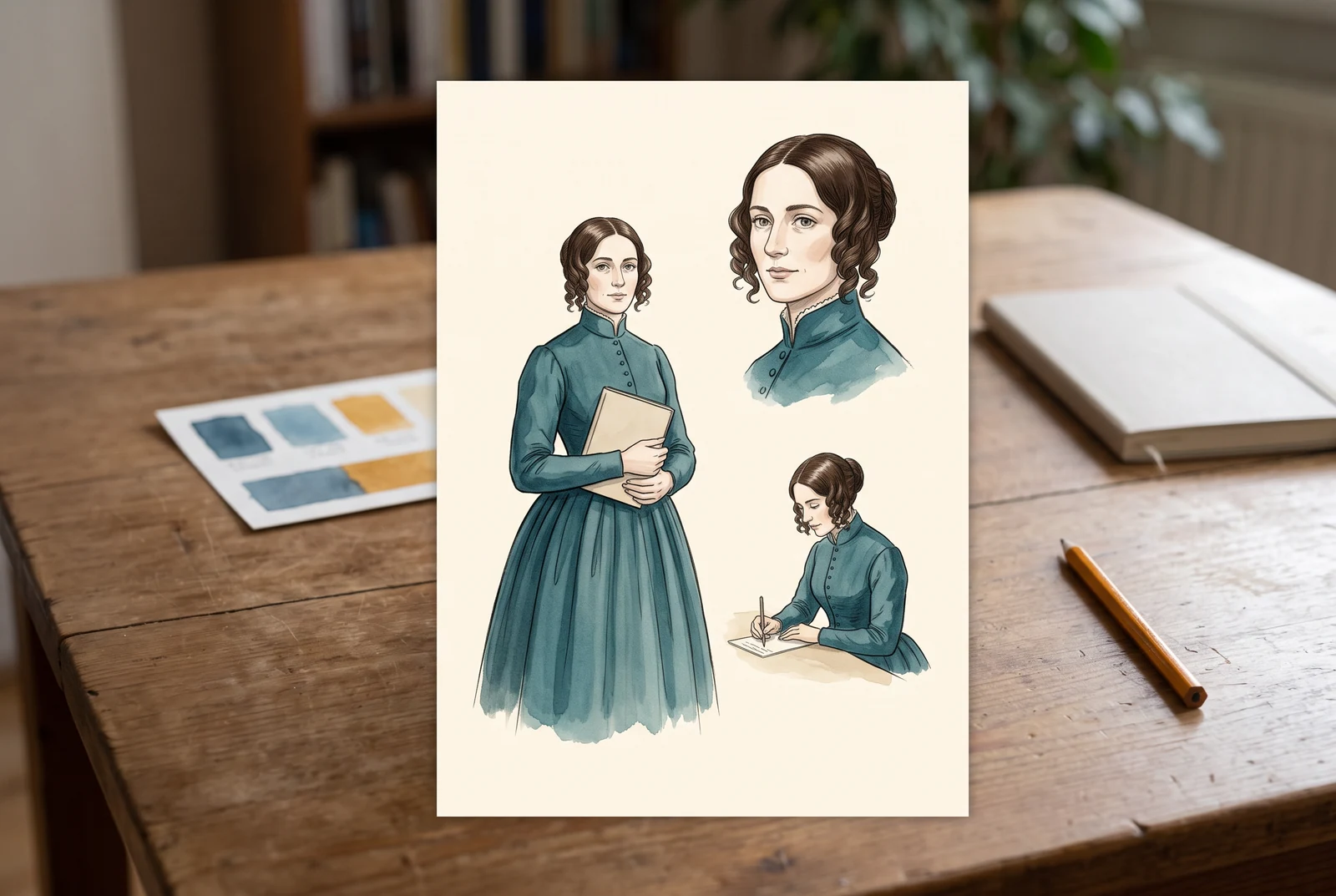
Start with this decision
Keep three columns in the brief: what a cited record supports, what an artist has chosen visually, and what the story invents. For adult Ada Lovelace around 1843, cite the published translation and notes, label costume and scene choices as interpretation, and identify invented dialogue.
Inspect an existing work example
Inspect a real character-reference workflow, with its limits
The existing Lantern Relay work uses an original fictional cast and approved character references. Asha Vale’s reference and the first delivered page below let you inspect recurring cues. This modern fictional example does not establish Ada Lovelace’s appearance or historical accuracy.
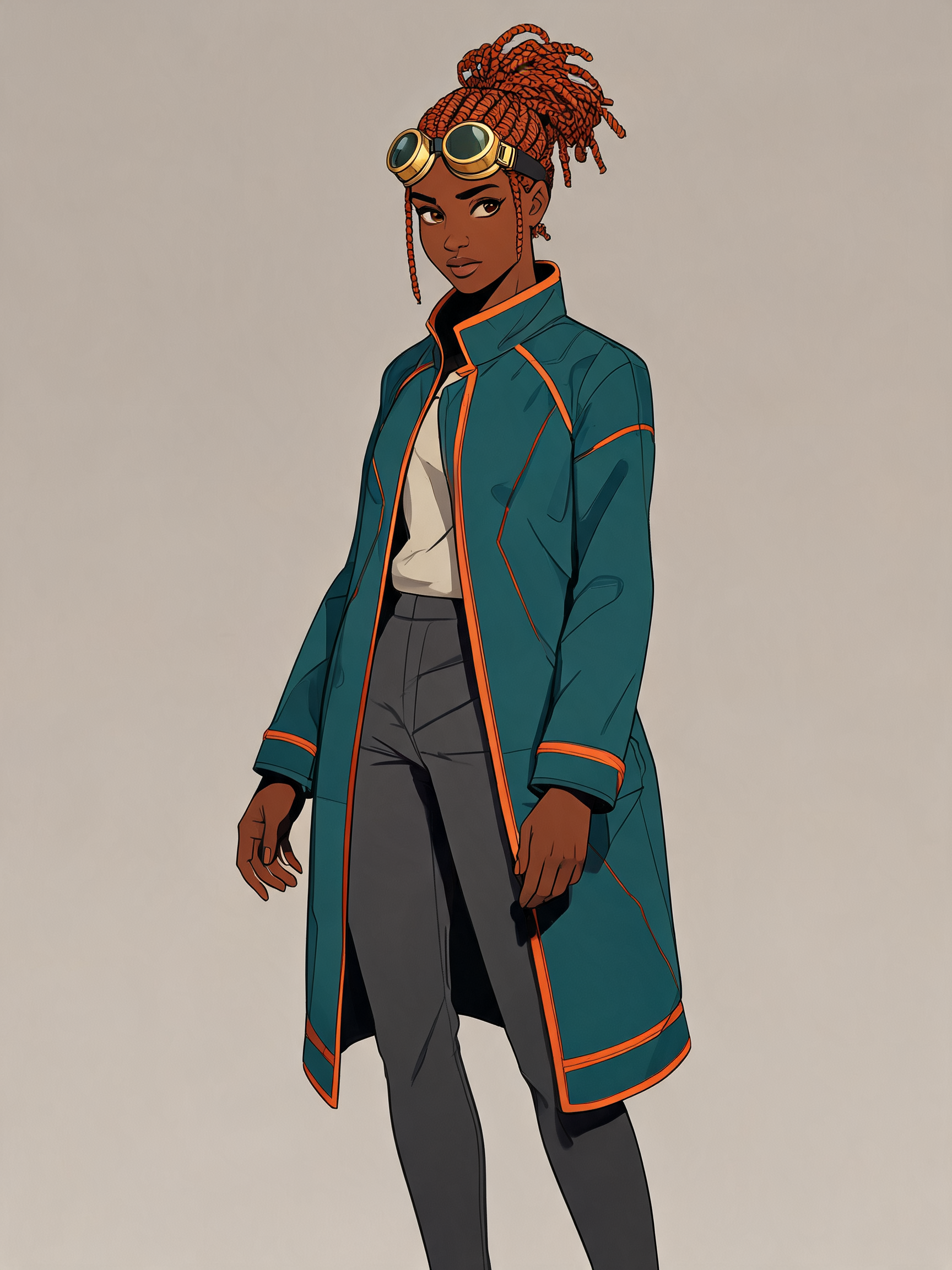
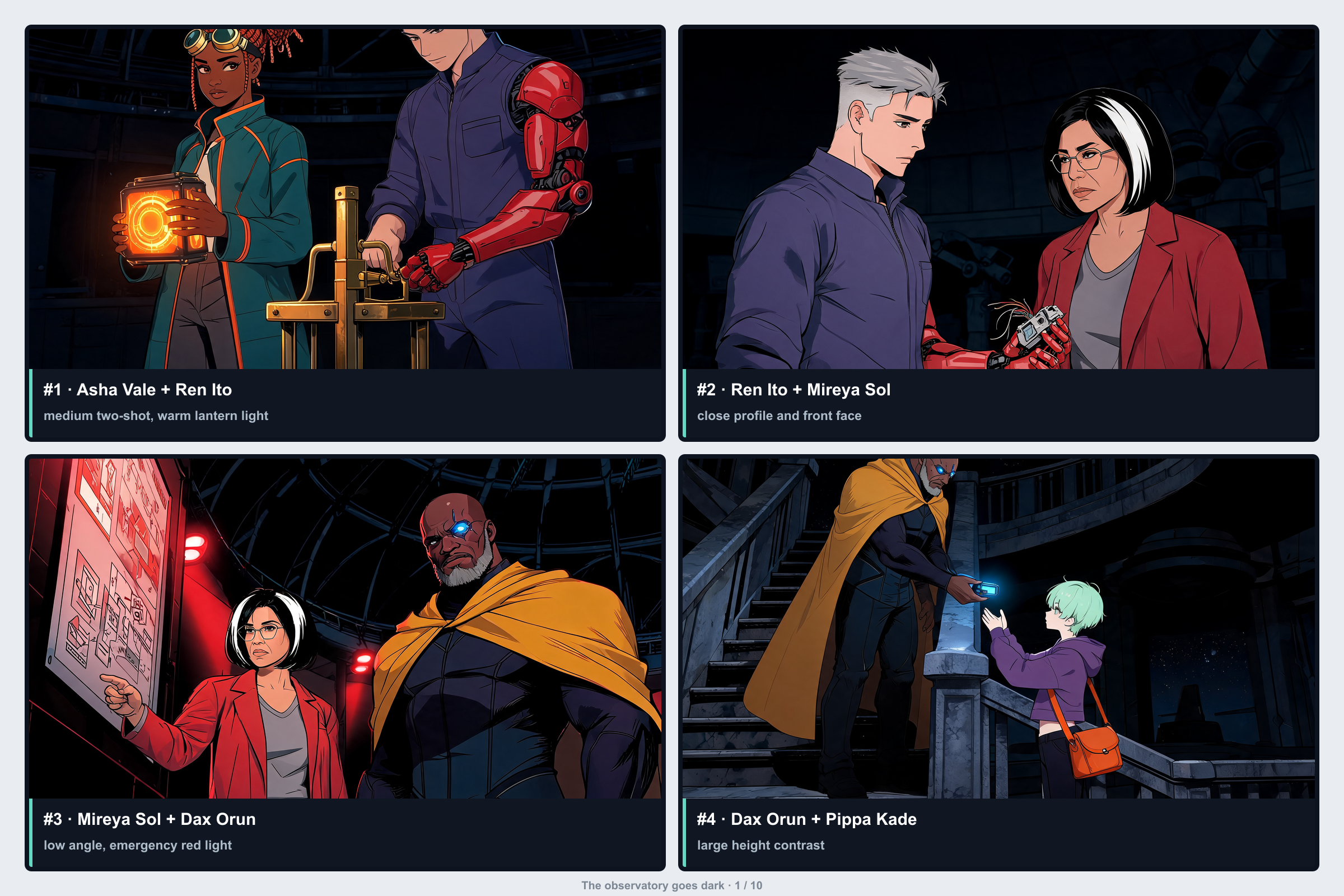
- Compare Asha’s copper-colored braids, goggles, teal coat and orange trim with her appearances in the delivered page.
- Reference-guided work still needed review and targeted corrections in the recorded project. Minor details can vary; an approved reference is not an automatic identity lock.
- The page uses English diagnostic labels rather than story dialogue, and some framing crops a character’s head. These are visible limits of this specific example.
Previously published first-party controlled work, separate from the new planning exercise and the AI lifestyle scenes. No new paid product generation was run for this guide. Visible lettering in the original example is English.
Local planning exercise
Separate fact, interpretation and invented dialogue
Choose a type of note for an adult Ada Lovelace character around 1843. These examples classify an editorial decision; they do not authenticate a portrait or generate a reference sheet.
Selected option: A documented historical fact
Use a primary institution’s record for the publication fact and preserve its scope.
A note for the next draft
Keep the source attached
Museum accounts record the 1843 publication of Lovelace’s translation of Menabrea’s Analytical Engine article with her own notes.
- Link the institution and identify the dated publication.
- Do not turn a concise record into an unsupported personal anecdote.
- Keep disagreement or uncertainty where a source describes it.
This planning exercise runs only on this page. It does not upload, generate, save between visits or send your choices to the product.
An authored planning exercise. Its notes and cards are not generated comic art, a fidelity score, an identity lock or a reconstruction of a historical person.
Prepare, create and review
Start a small source register
Use a reliable museum or archive entry for the event, date and object you intend to depict. Keep its link next to the exact claim it supports.
- Record the source title and the fact you are using.
- Preserve uncertain dates and attributions instead of making them precise.
- For Ada, distinguish the 1843 publication record from invented room and costume details.
Give the character a visual and story brief
Choose a manageable reference set for the character’s adult stage, silhouette and relevant props. State where the comic departs from documented material.
- List facial and costume cues chosen for the adaptation.
- Describe expression and posture as performance choices.
- For character growth, record the changed knowledge, goal or situation separately from stable visual identity.
Review the next appearance against both records
A new image can preserve the outfit but introduce a historical error, or retain the period setting while changing the character. Review those as separate questions.
- Check the approved visual reference in close and distant scenes.
- Verify dates, object descriptions and any quoted text against the sources.
- Label fictional dialogue and repair unsupported factual detail before sharing.
Problems worth catching early
- A convincing AI costume is treated as historical evidence.
- Keep the image labeled as an interpretation. Verify claims with the source register instead of inferring them from the generated artwork.
- Character growth becomes a new face in every scene.
- Plan the changed adult stage or emotional beat explicitly, retain approved identity cues and review the actual outputs without assuming automatic locking.
Before you keep the result
- Each historical statement has a source with the right scope.
- Visual choices and invented dialogue are labeled as interpretation or fiction.
- Reference cues and intentional character changes have been checked separately.
Picture the finished project in use
A page should also make sense away from the editor: held as a booklet, read on a phone, or reviewed as a coordinated set. These presentation concepts are separate from the recorded work examples above.
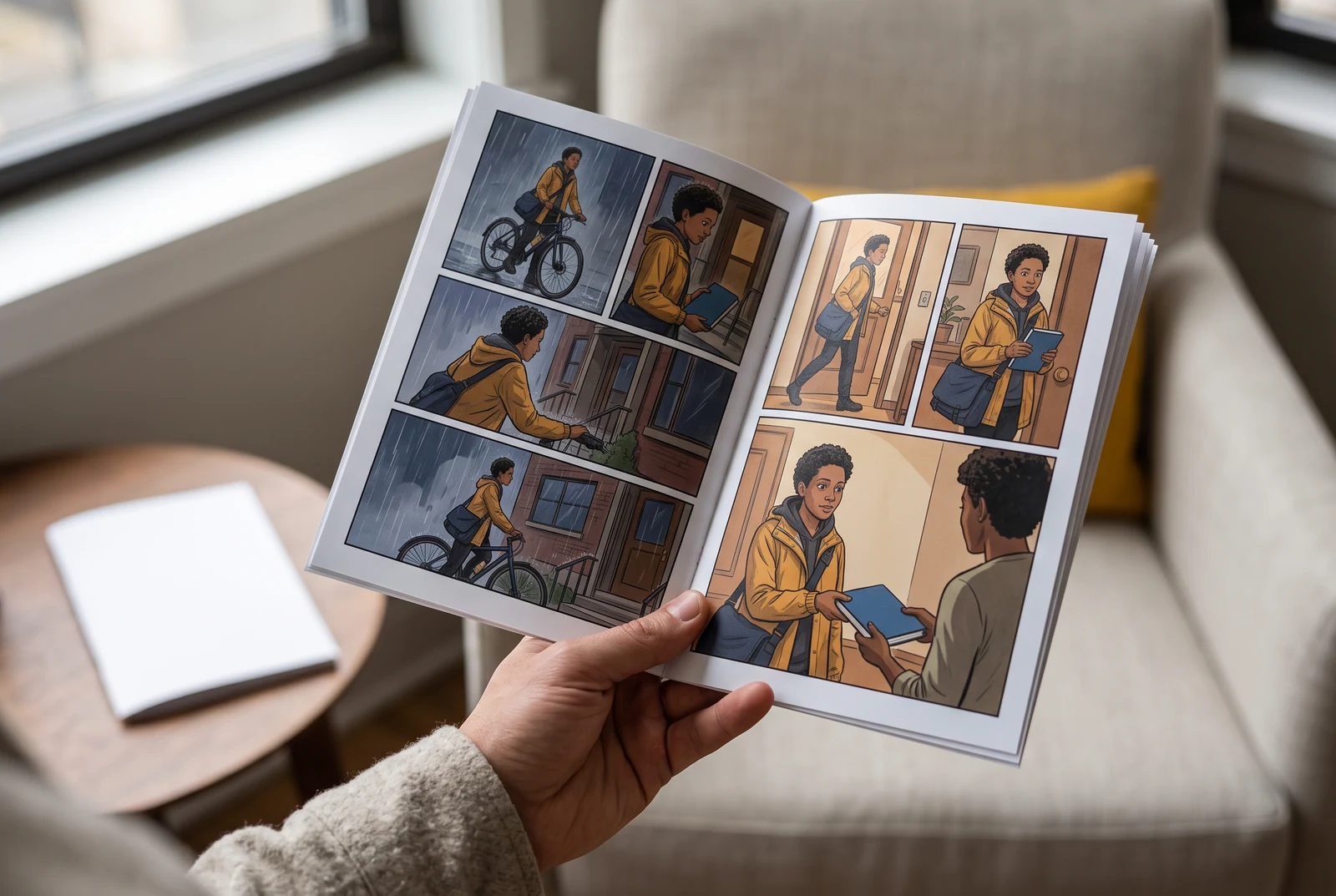
A comic story in hand
Paper edges, a real reading distance and the whole page make the intended presentation clear. This is a fictional AI scene, not a delivered physical item.
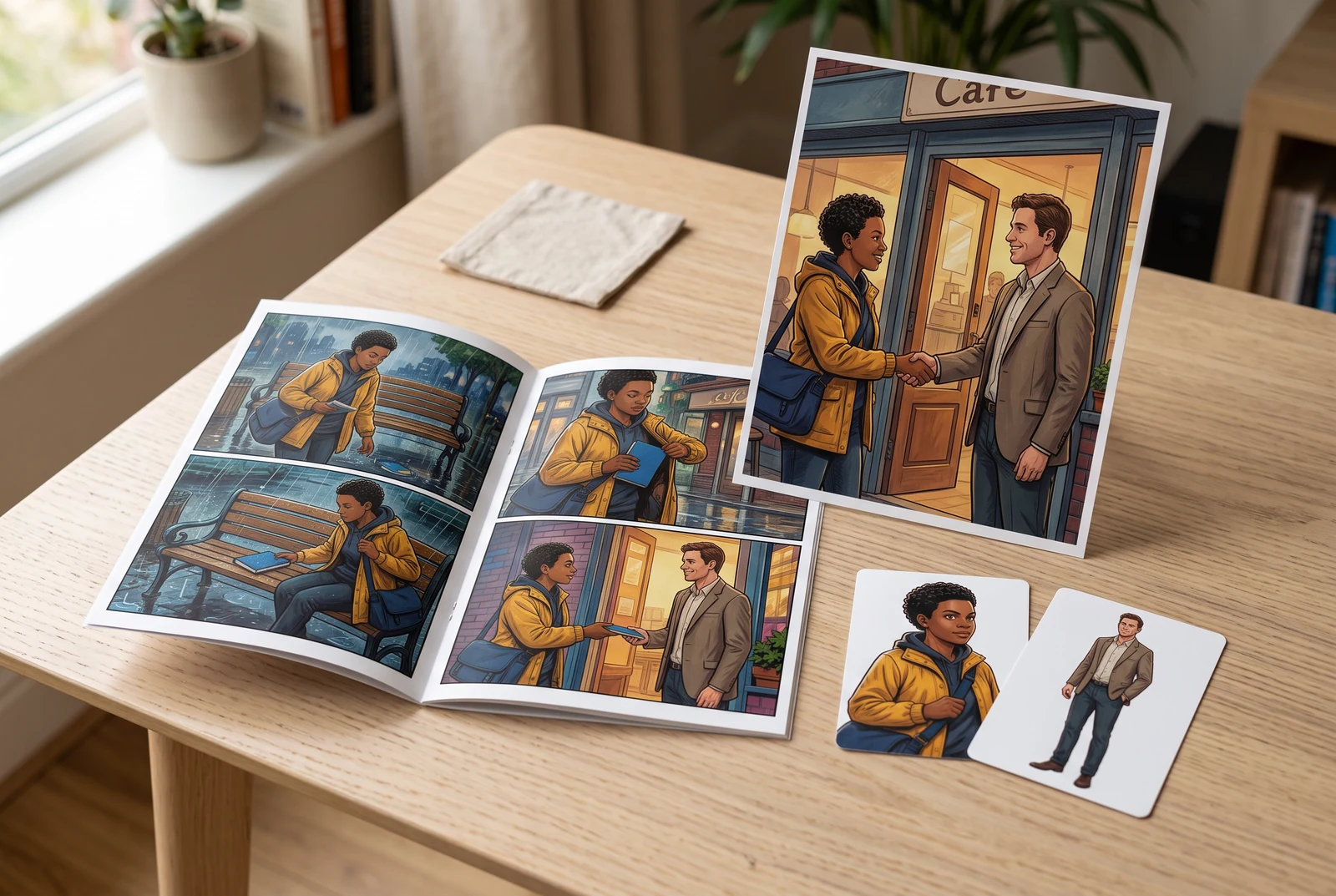
One project, several useful views
Review a finished page beside its reading view and character notes. A coordinated display can communicate the project; it does not prove automatic continuity.
AI-generated fictional presentation scenes, not customer photographs, historical documents, product screenshots, verified print offers or proof of model accuracy.
Frequently asked questions
Can AI reconstruct the exact appearance of a historical person?
This guide does not establish exact reconstruction. Portraits and records have attribution limits, and generated images add interpretation. Label the result as an original depiction and cite the material used.
How can a historical character grow during a story?
Plan what changes in the adult character’s situation, knowledge or goal, then separate that dramatic arc from documented events. Do not present invented private thoughts or dialogue as biography.
Does a reference image lock the character automatically?
No automatic identity lock is established here. Use approved cues, check the controls currently offered in the product, and compare every new appearance with the reference. The existing fictional work still required review.
Is the Ada illustration an authentic archival portrait?
No. It is a newly generated historical-theme design concept. The linked museum and computer-history records support specific historical facts, not the accuracy or endorsement of the generated image.
Continue the workflow
Linked guides and tools have their own language coverage. An English-edition label identifies a fallback where a localized destination is unavailable.