

Photo-based storytelling
Decide what your photo-to-comic result should preserve
A picture can become a close visual adaptation or the starting point for a new story. Say which one you want. A polished comic face can still lose the details that made the source meaningful.
Open Photo to ComicAI creation happens in the linked product. Check sign-in, the available controls, plan requirements and the displayed credit cost before generating. This guide does not promise a free or exact result. Plans and credits
LlamaGen Editorial TeamReviewed
Start with this decision
List the face, hair, clothing and meaningful objects you want retained. State the changes you allow in style, pose and background. Compare the result with the same source at a useful size; semi-realistic is an art direction, not a face-fidelity measurement.
Inspect an existing work example
A fictional photo reference became a comic story
The published Chicago Medicine Run record pairs an original AI-generated portrait reference with a curated comic page. It is a real recorded artwork transformation using fictional material, not a customer photograph or a new fidelity test.
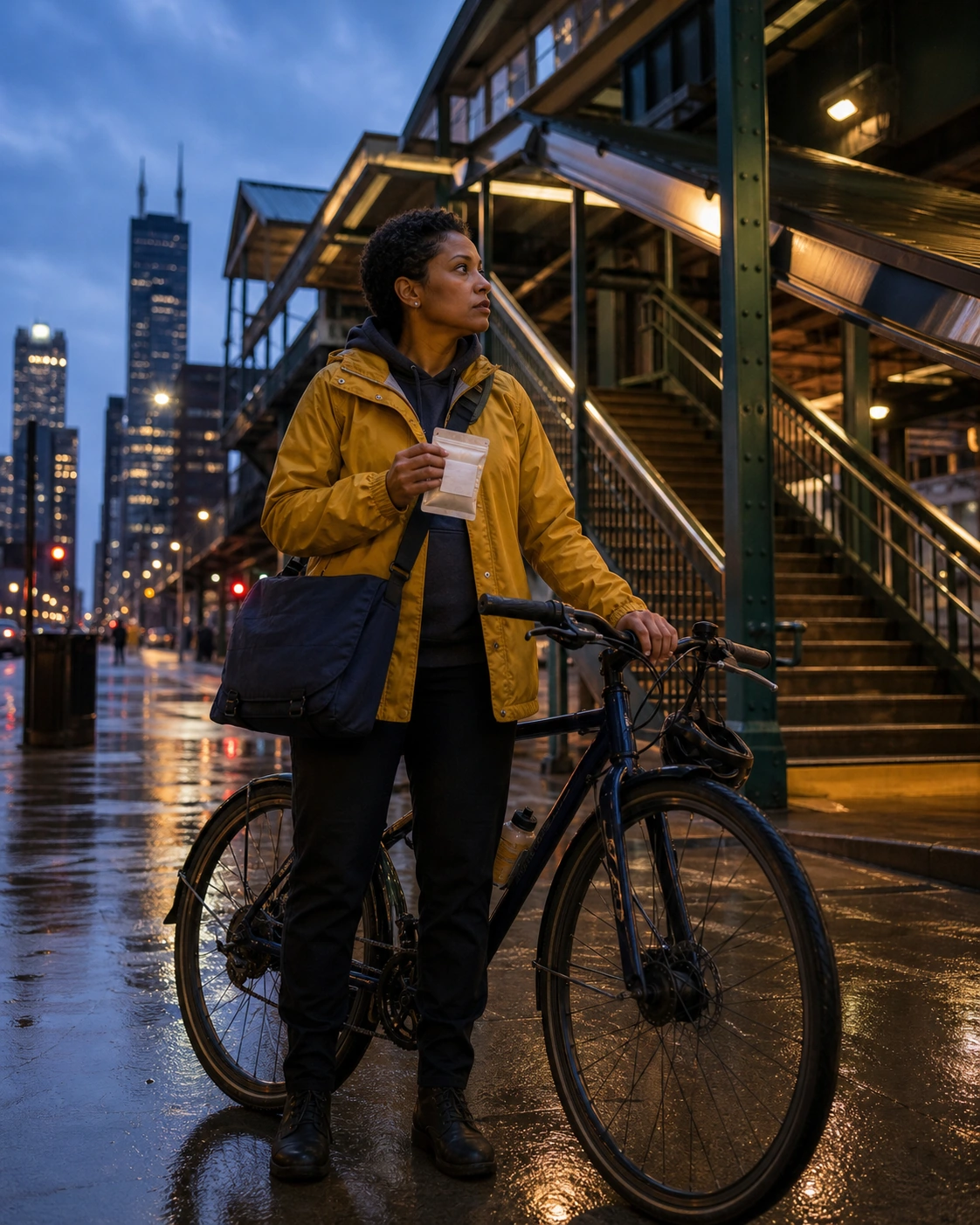
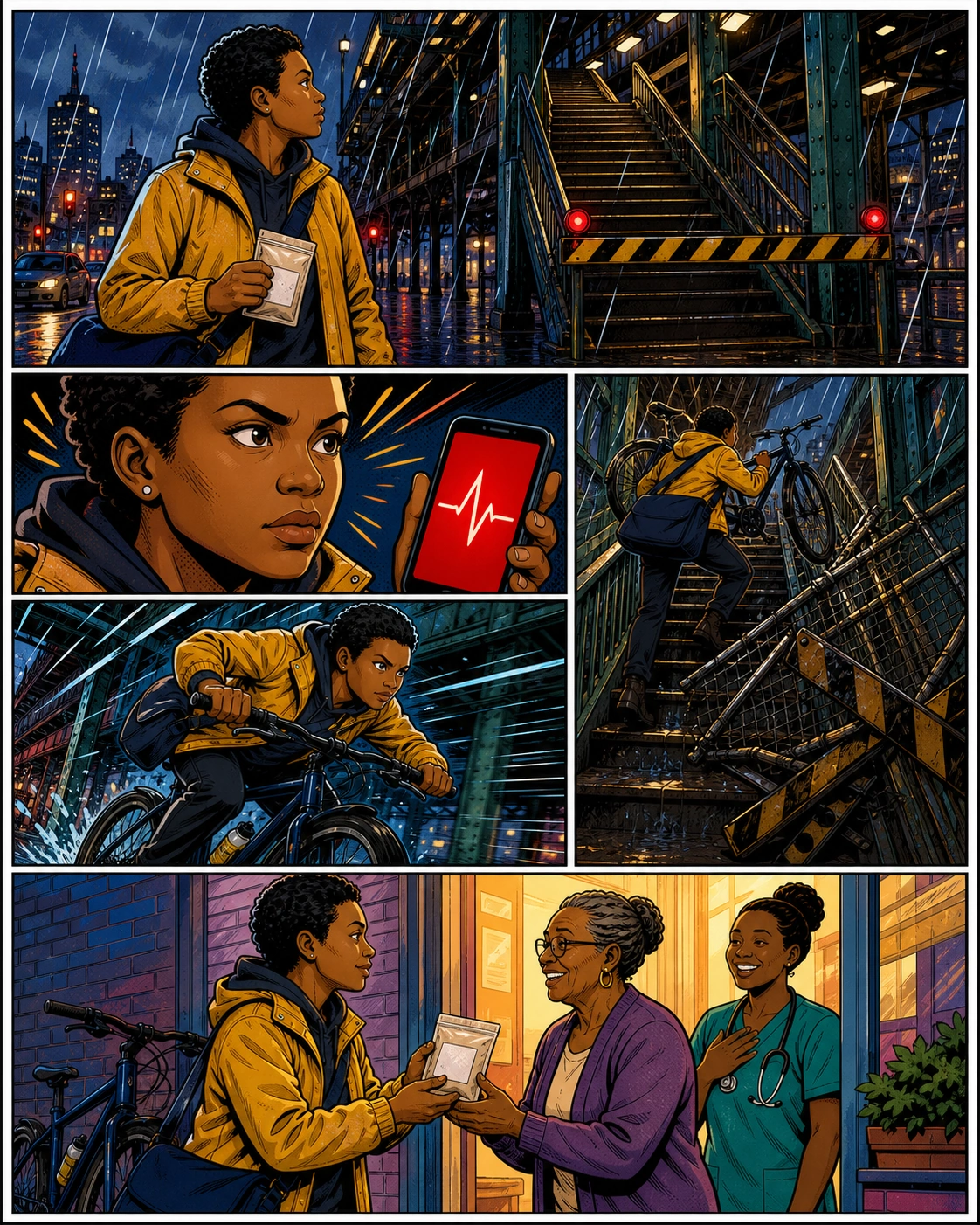
- The short curly hair, yellow raincoat, dark shoulder bag, bicycle and rainy elevated-station setting remain recognizable cues.
- The face and pose are redrawn in comic form. New barriers, phone prompts and delivery scenes extend the story beyond what the reference shows.
- This one example does not establish exact likeness, pixel preservation or a guaranteed comic-page result for another input.
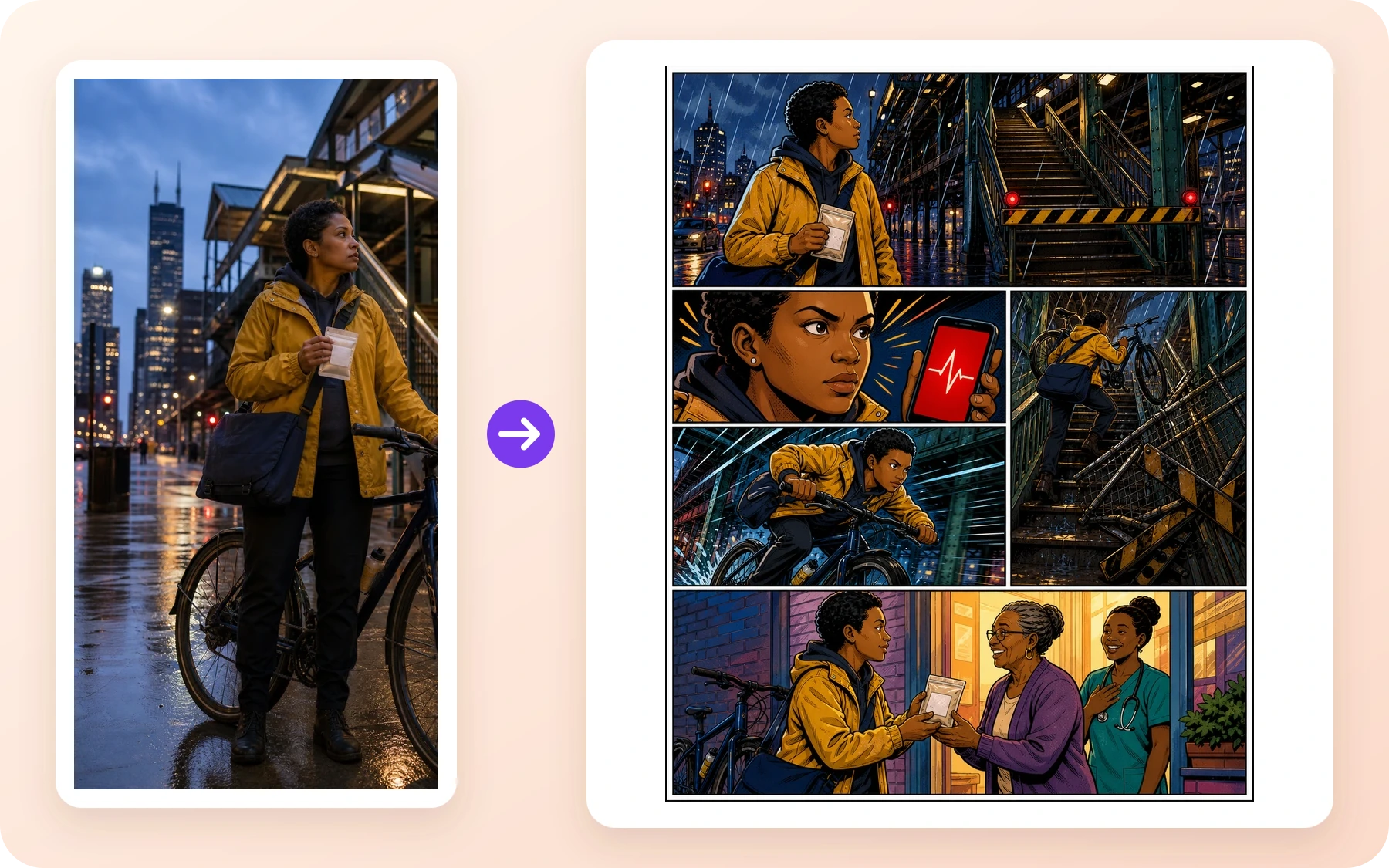
Previously published first-party controlled work, separate from the new planning exercise and the AI lifestyle scenes. No new paid product generation was run for this guide. Visible lettering in the original example is English.
Local planning exercise
Choose the scope of a photo-based brief
Select the type of adaptation you want. The brief uses a fictional adult courier reference; it does not analyze a face or transform an uploaded photograph.
Selected option: Close visual adaptation
Prioritize the source’s visible identity cues and avoid inventing a new event.
A note for the next draft
Preserve what the photo actually shows
Keep the source subject’s hair silhouette, main clothing, pose and meaningful prop. Simplify the rendering without inventing another event.
- Compare the eyes, nose, jaw and hair shape at the same viewing size.
- Retain the coat, bag and other details chosen in the brief.
- Reject an attractive result if it loses the intended subject cues.
This planning exercise runs only on this page. It does not upload, generate, save between visits or send your choices to the product.
An authored planning exercise. Its notes and cards are not generated comic art, a fidelity score, an identity lock or a reconstruction of a historical person.
Prepare, create and review
Choose one useful source
A clear source and a short preservation list give you something concrete to judge. Do not ask an ambiguous or obscured reference to establish details it does not show.
- Use an image you may use and obtain the subject’s permission where needed.
- Identify the visible face, hair, clothing and prop details that matter.
- Keep a copy of the unaltered source for comparison.
Ask for a style without rewriting the person
Semi-realistic shading, ink lines and a cartoon treatment describe presentation. They do not prove that the resulting face or body is unchanged.
- Write the desired rendering in one sentence.
- Write the features to retain in a separate sentence.
- Specify whether background and pose changes are allowed.
Review one change at a time
Inspect recognizable features before judging how attractive the image looks. If you want a sequence, compare the same cues in every appearance.
- Compare the source and result side by side at a similar size.
- Log the precise changed feature instead of only saying not accurate.
- Revise one instruction, keeping the source and other settings stable where possible.
Problems worth catching early
- Semi-realistic is treated as a guarantee of the same face.
- Review the actual facial proportions and hair silhouette. Style labels do not measure identity preservation.
- A story scene is mistaken for something captured in the photograph.
- Separate retained source cues from invented actions and captions, especially when sharing a personal memory.
Before you keep the result
- The result retains the specific source cues chosen in the brief.
- New events, poses and background details are understood as adaptations.
- Every recurring appearance has been checked, not only the cover.
Picture the finished project in use
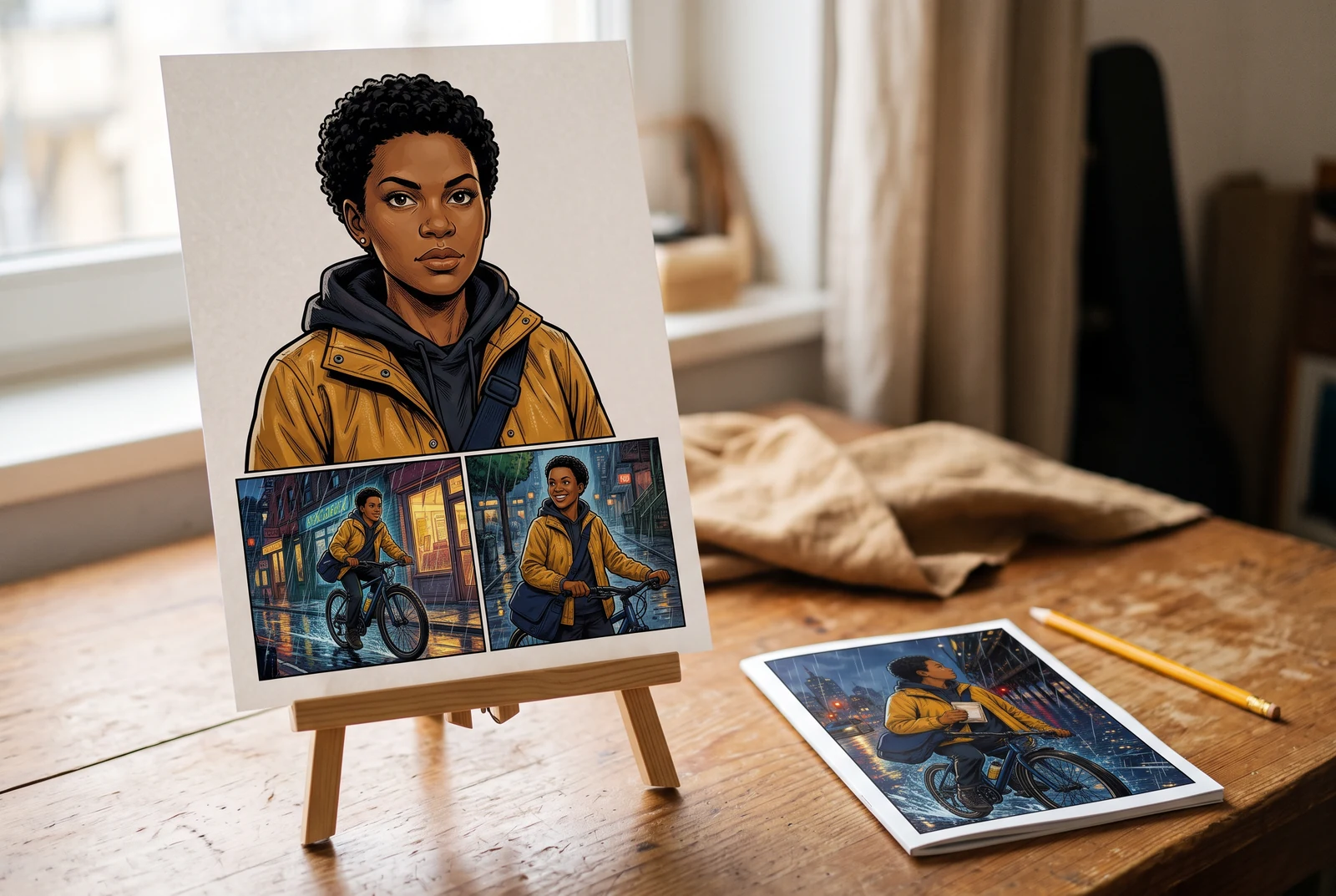
A page should also make sense away from the editor: held as a booklet, read on a phone, or reviewed as a coordinated set. These presentation concepts are separate from the recorded work examples above.
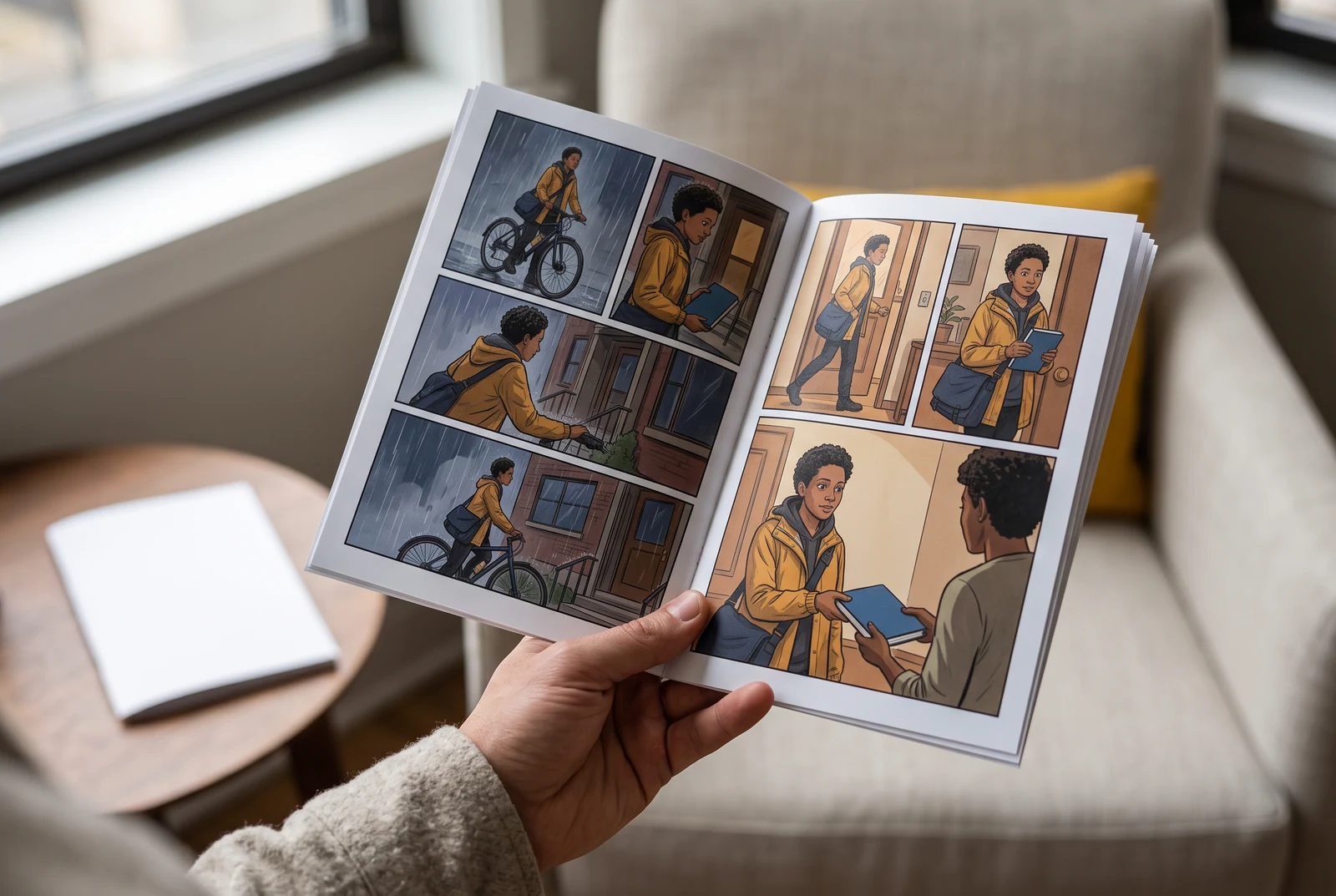
A comic story in hand
Paper edges, a real reading distance and the whole page make the intended presentation clear. This is a fictional AI scene, not a delivered physical item.
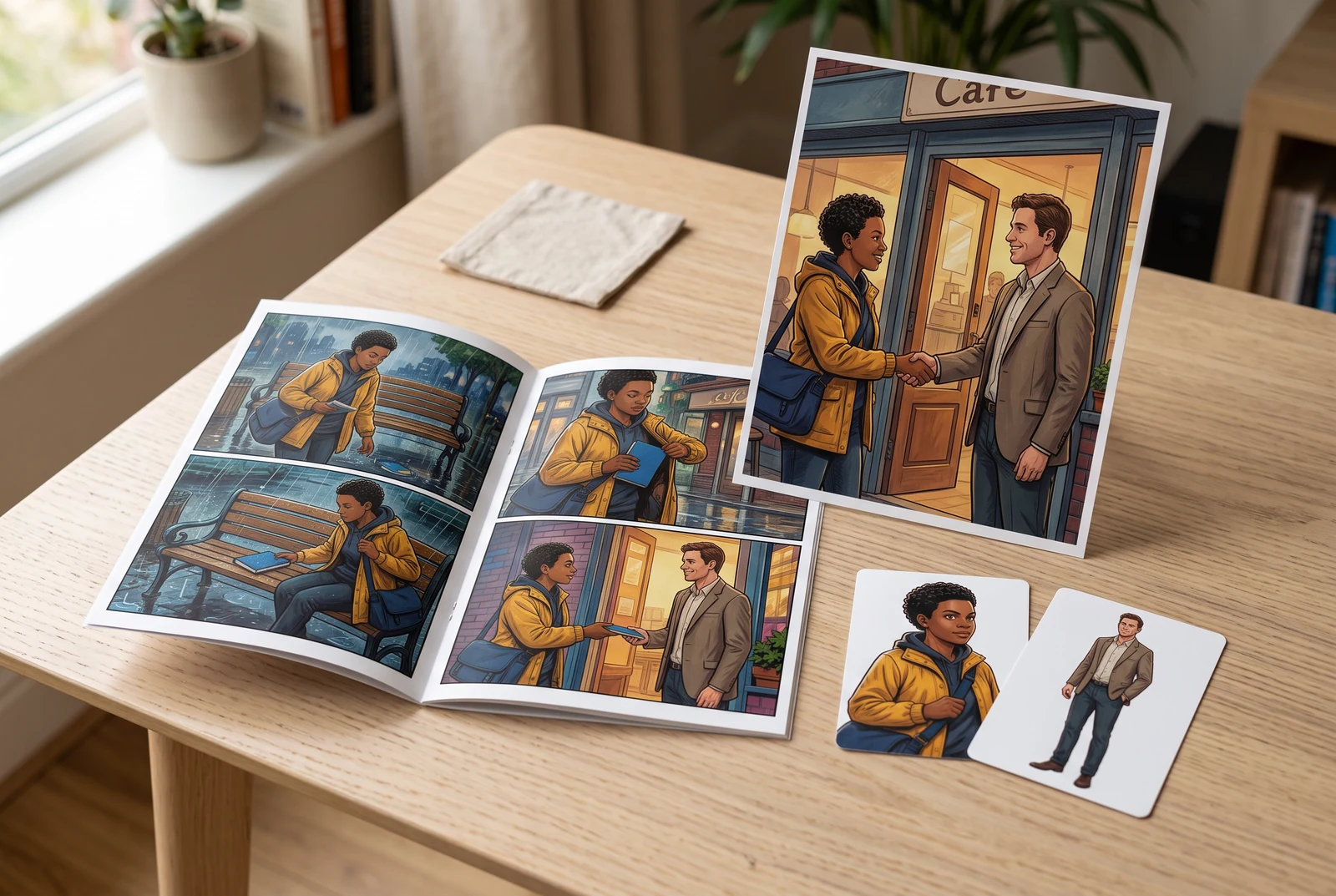
One project, several useful views
Review a finished page beside its reading view and character notes. A coordinated display can communicate the project; it does not prove automatic continuity.
AI-generated fictional presentation scenes, not customer photographs, historical documents, product screenshots, verified print offers or proof of model accuracy.
Frequently asked questions
Can the tool preserve a person exactly?
This guide does not establish exact face or pixel preservation. Generative results can change facial proportions, expressions, clothing and setting. Compare each result with the approved source before keeping it.
What should I ask for in a semi-realistic comic?
Describe the illustrated shading and line treatment, then separately name the visible features to retain. Keep the source fixed when comparing styles; the term semi-realistic alone does not guarantee likeness.
How do I keep the person recognizable across several panels?
Retain an approved reference and a short cue list, compare every appearance and revise specific mismatches. Do not assume a repeated name or one successful panel guarantees the whole sequence.
Is the displayed source a customer photograph?
No. The source and comic are original fictional AI materials from an existing recorded example. The comparison shows an authored story transformation, not a real-person identity study or a new product benchmark.
Continue the workflow
Linked guides and tools have their own language coverage. An English-edition label identifies a fallback where a localized destination is unavailable.