

Comic animation and layout
Plan a manga action layout the reader can follow
Diagonal borders and speed lines can add energy, but the reader still needs to understand who moves, where they are going and what changed. Plan the action in simple thumbnails before decorating the page.
What you will make
A short manga action scene with a declared reading direction, consistent screen geography and a clear final story beat.
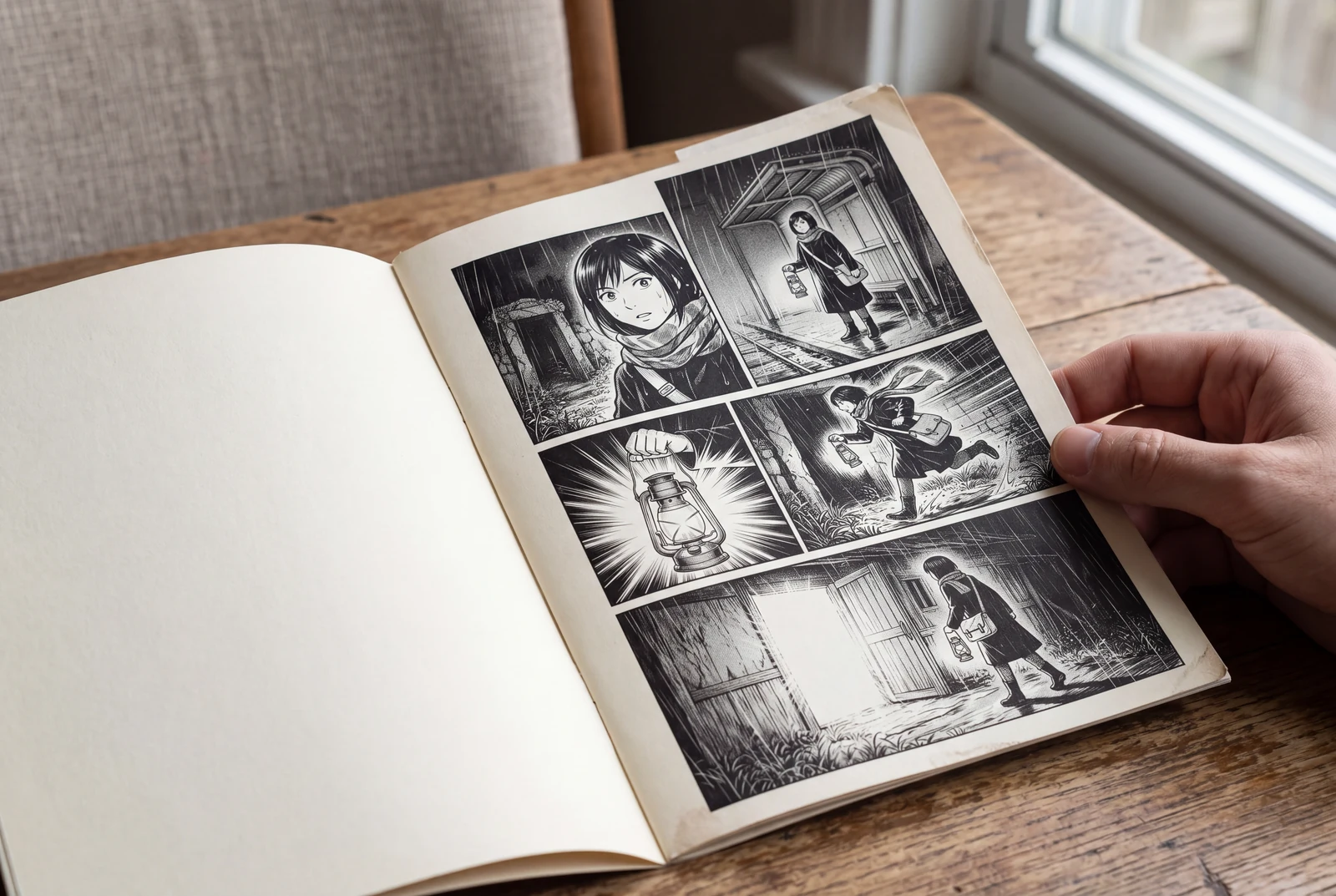
Content reviewed:
Declare the reading direction and protect it
Choose right-to-left or left-to-right for this edition and make the first row unambiguous. Right-to-left manga is a convention, not a reason to mirror text or artwork automatically. When adapting to another reading direction, review panel order, gaze, entrances and balloon order together.
- Write the intended reading direction in the production brief.
- Keep the courier and gate in a recognizable spatial relationship.
- Test the empty panel order before adding dialogue or detailed backgrounds.
Show position, movement and consequence
Establish where Mika stands before moving to a detail of the lantern. Let one panel show the action and the next show its consequence. A close-up is useful when the reader already knows where the hand and prop belong; it becomes confusing when it replaces all spatial context.
- Use a wide panel to establish the route and obstacle.
- Give the decisive hand or prop movement enough space.
- Return to a wider or reaction view when the state of the scene changes.
Reframe the page for a short-drama screen
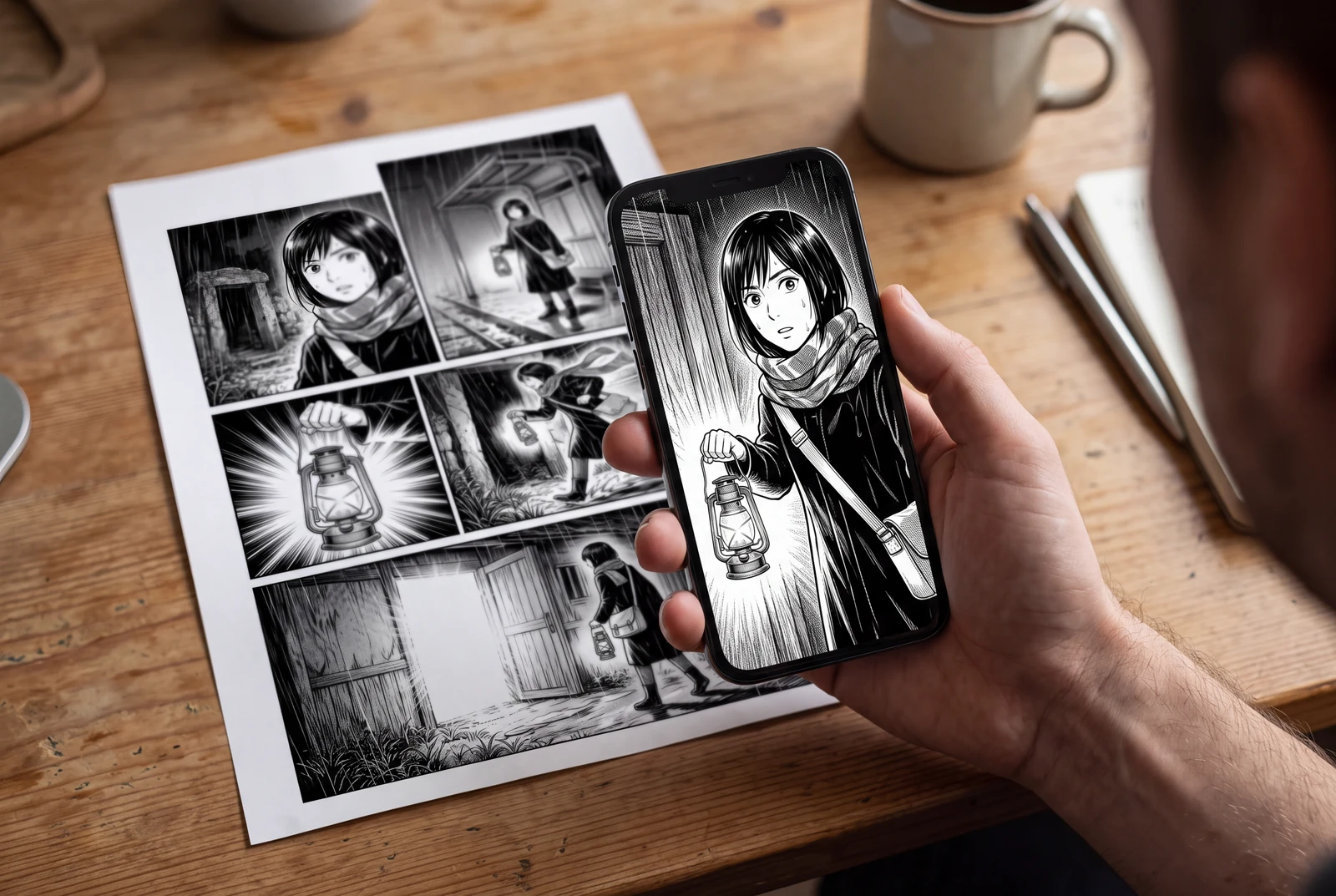
A manga page and a portrait drama edit have different viewing constraints. Keep the original page as the reading version, then plan separate crops or shots for the screen version. Inspect each crop for missing hands, cut-off props and lost story information. A generated still only demonstrates framing; it does not prove animation or camera movement.
- Keep the event order consistent between page and screen.
- Use scene stills to discuss costume, light and framing, with an explicit concept label.
- Review the finished video separately if you animate the sequence.
A worked example
Five panels around one decisive action
The shared m-221 template has two pairs of panels followed by a wide final panel. Assign the first two rows according to the chosen reading direction; the template geometry alone does not determine that direction.
| Beat | Framing | Story information | Review check |
|---|---|---|---|
| 1 · Establish | Wide enough to identify Mika and the gate. | The lantern must reach the doorway before the tram departs. | The destination is visible and the scene has a clear goal. |
| 2 · Prepare | Medium view of the courier turning toward the gate. | Mika turns and steadies the lantern before lifting it. | The scarf and satchel remain on the same sides. |
| 3 · Detail | Close view of the hand and brass lantern. | Show the grip and the object that will trigger the next action. | The fingers, handle and lantern shape remain readable. |
| 4 · Act | One readable action panel. | Mika lifts the lantern toward the opening. | The silhouette reads without relying on speed lines. |
| 5 · Resolve | Wide final panel. | The gate opens; the light reveals the next part of the story. | The final image changes the situation and preserves the travel direction. |
Before you export
- Another reader can identify the first panel and trace the full reading path.
- The important action survives at handheld page size and in the intended screen crop.
- Any mirrored, cropped or rearranged version receives its own lettering and continuity review.
Start with a real layout
These previews use the same panel geometry as the LlamaGen layout library. Opening a layout passes its ID and panel count to the comic creator; it does not preserve existing artwork or guarantee an editable reconstruction of an uploaded flat image.
Five panels with a wide final beat
Use this layoutFour panels in a 2 × 2 grid
Use this layoutSee the finished story in context
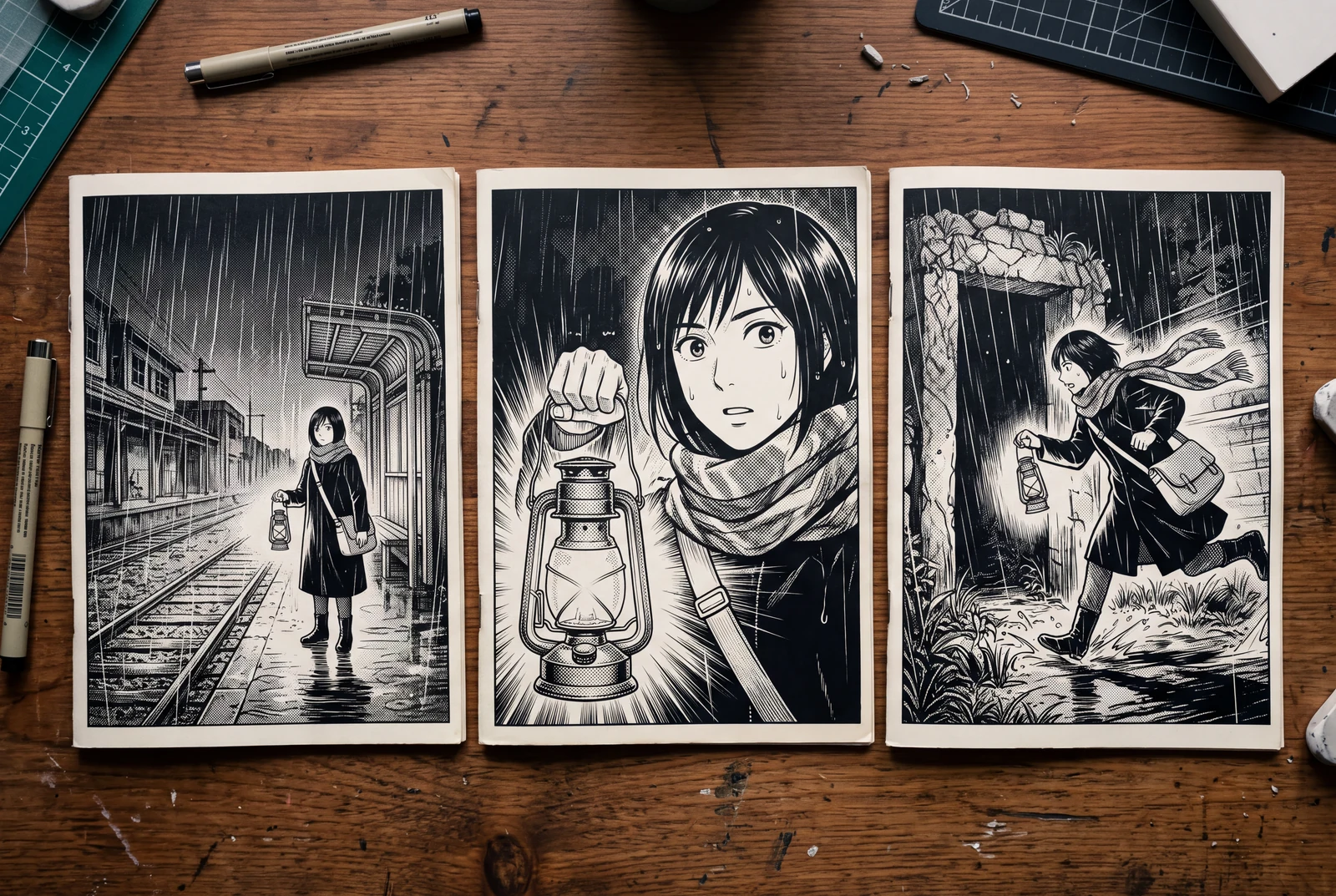
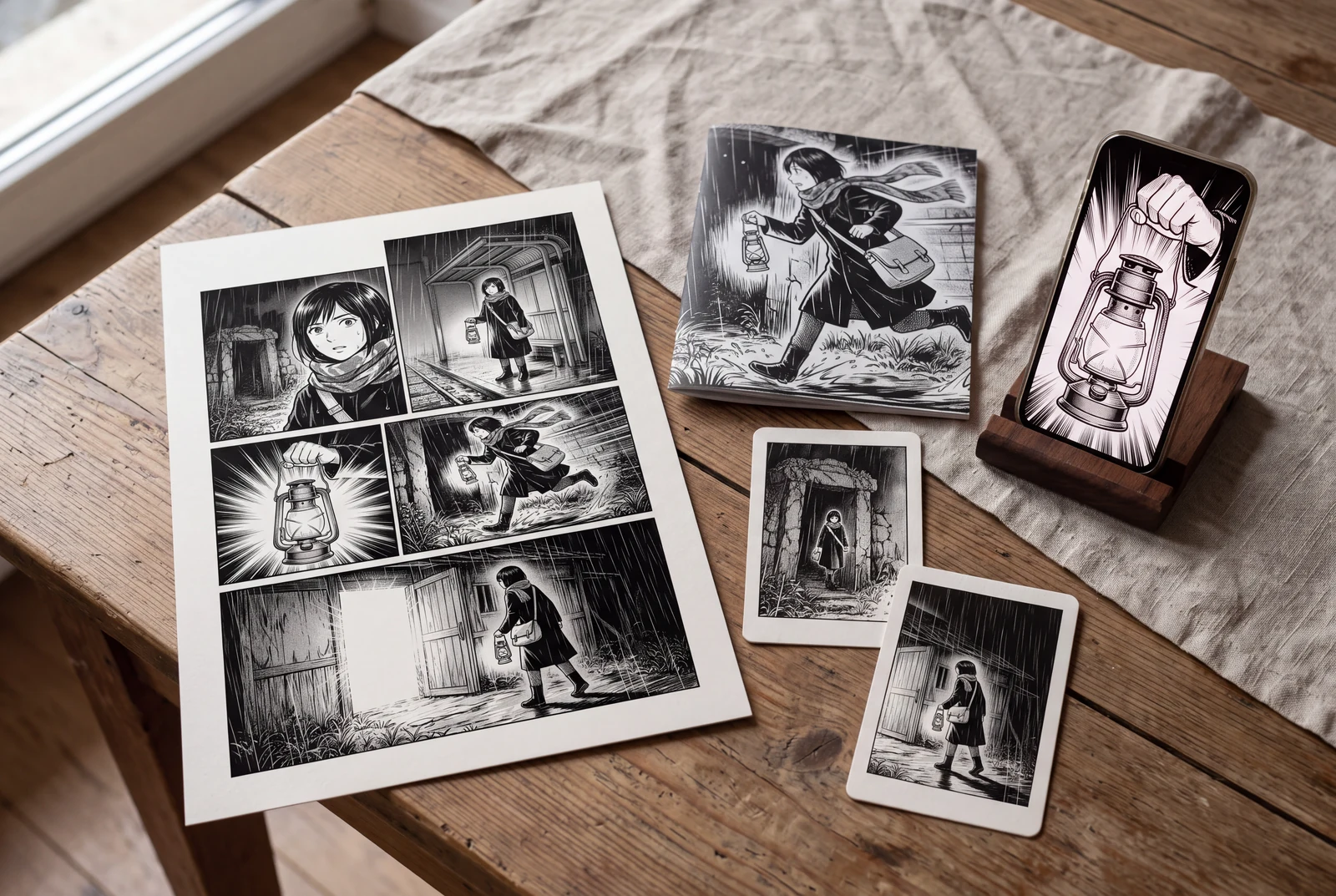
AI-generated presentation concepts with fictional adult characters. Paper prints, game scenes and drama stills illustrate possible uses; they are not customer photographs, playable-game captures, generated-video demonstrations or a print service.
Questions before you begin
Must every manga page read right to left?
No. Decide the reading direction for the edition and tell the reader clearly. Many manga publications use right-to-left order, but a particular work or adaptation can use another convention. Consistency and clear panel and balloon order matter more than applying a rule blindly.
Does a diagonal panel make the action clearer?
Not by itself. Start with readable positions, movement and consequences. Add angled borders only when the reading path remains clear and important faces, hands and props have enough room.
Can I turn the whole page into a portrait video by cropping?
A single crop can hide important panels or change the event order. Plan each screen shot separately and review continuity and subtitles in the exported video. The static drama concepts on this page only illustrate framing and presentation.