Cellular Respiration Comic Strip: A Cell Pays for Its Work
A glucose molecule starts the story. The cell’s work explains why the story matters.
Explain the main stages of aerobic glucose breakdown in a simplified eukaryotic cell, connecting energy transfer to ATP while keeping the sites of the reactions clear.
An original teaching example. Read the complete panel script, checks and references below the book.
03
Biology · cellular energy · LlamaGen
01 · Source materials
Give the cell a map and a reason to use ATP.
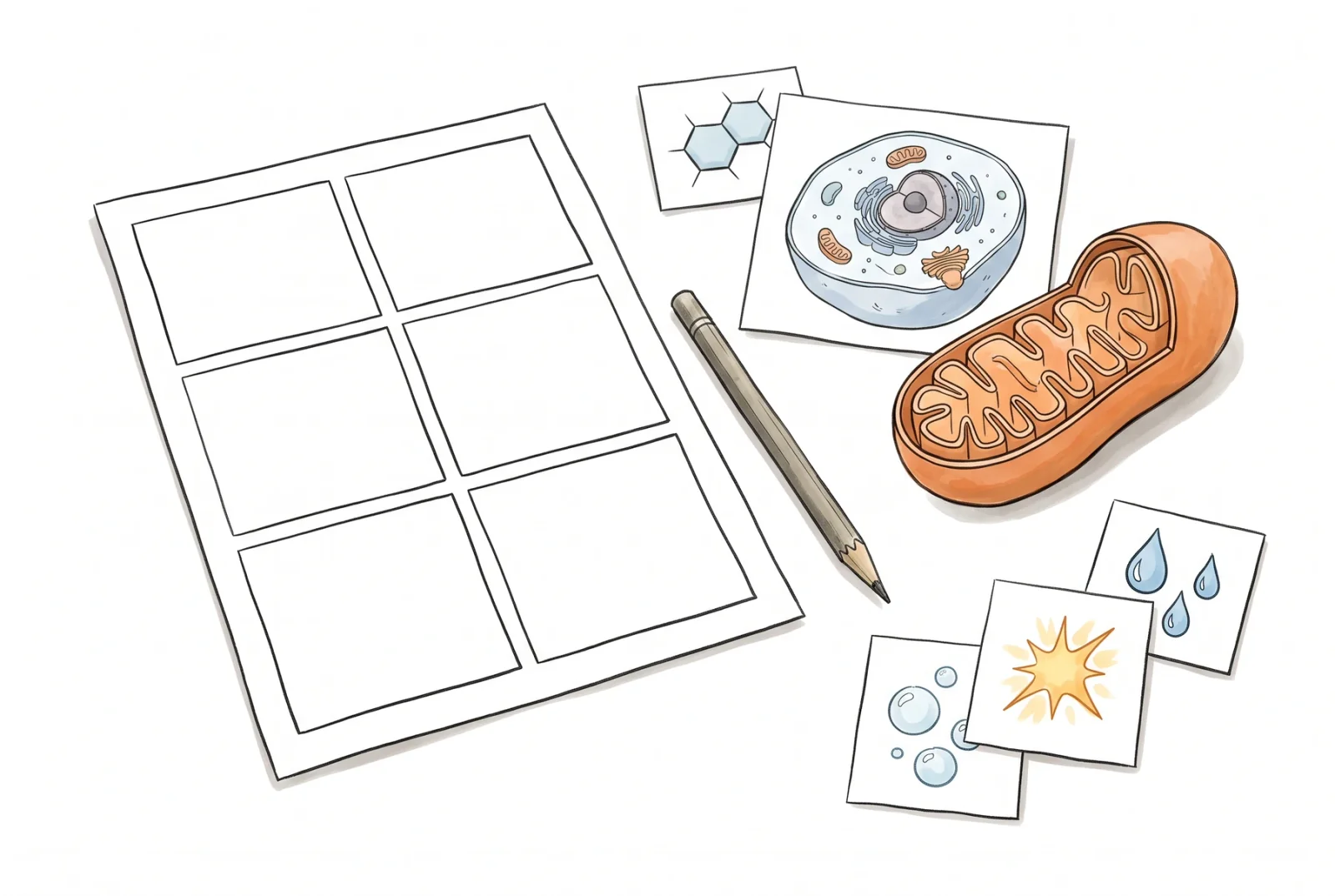
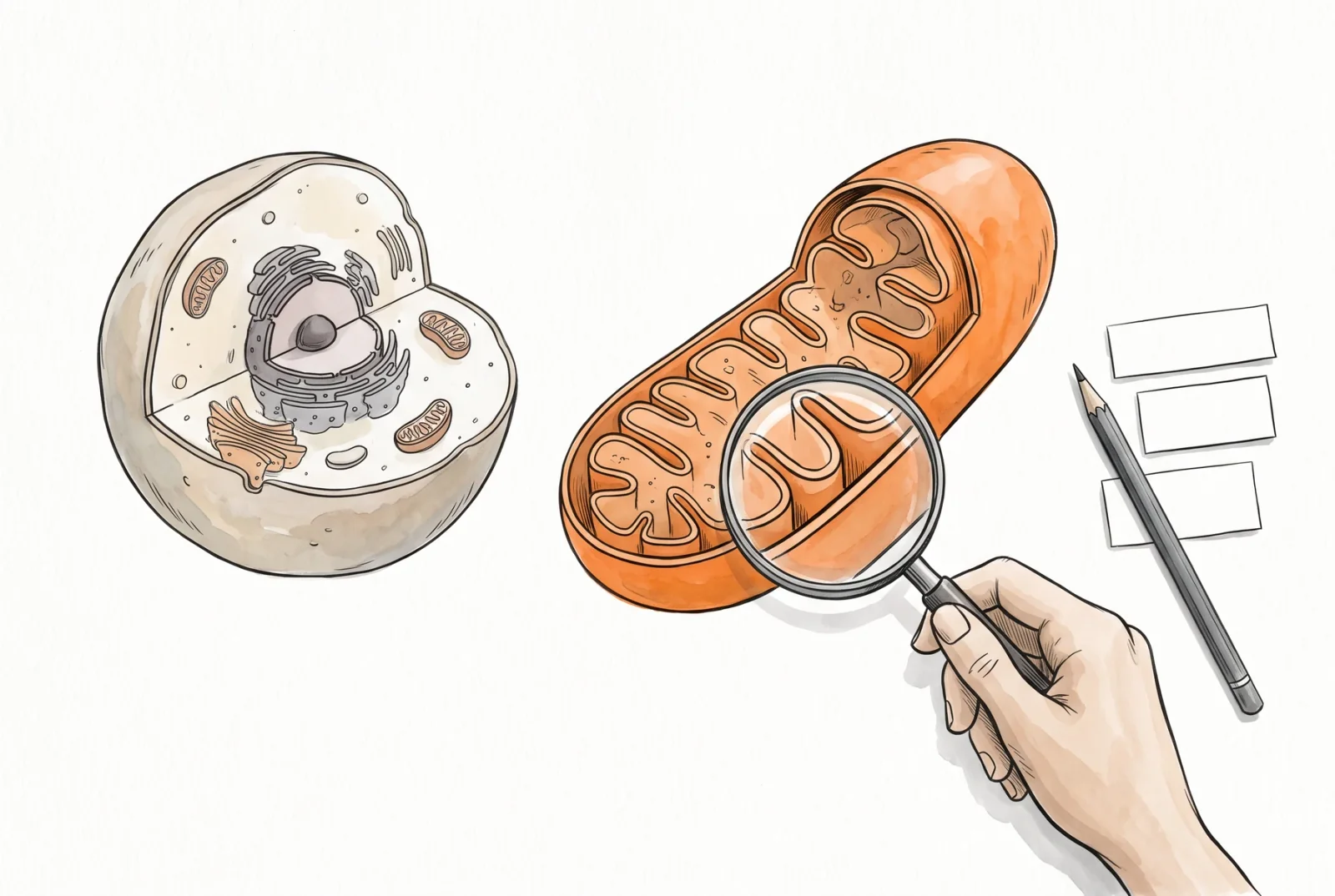
Start with a simplified animal-cell map showing the cytosol, mitochondrial matrix and inner mitochondrial membrane. The original classroom scenario follows a cell that needs ATP to power membrane transport. Put glucose and oxygen on a starting-materials card, and carbon dioxide and water on an overall-products card. Keep a separate note that ATP is regenerated from ADP and phosphate using transferred energy. These are overview cues, not a diagram claiming that every intermediate or atom is shown.
04
Biology · cellular energy · LlamaGen
02 · The challenge
Can the comic show where the energy goes without turning respiration into breathing, photosynthesis or a tiny fire?
Locations
Is glycolysis outside the mitochondrion in the cytosol, with pyruvate processing and the citric acid cycle in the mitochondrial matrix?
Oxygen’s job
Is oxygen placed at the end of the aerobic electron transport chain rather than shown directly splitting glucose during glycolysis?
ATP mechanism
Do electron transport, a proton gradient and ATP synthase have distinct jobs rather than become one unexplained “energy machine”?
Honest totals
Does the overview avoid promising the same fixed ATP yield for every cell and condition?
05
Biology · cellular energy · LlamaGen
03 · Planning the page
A story takes shape.
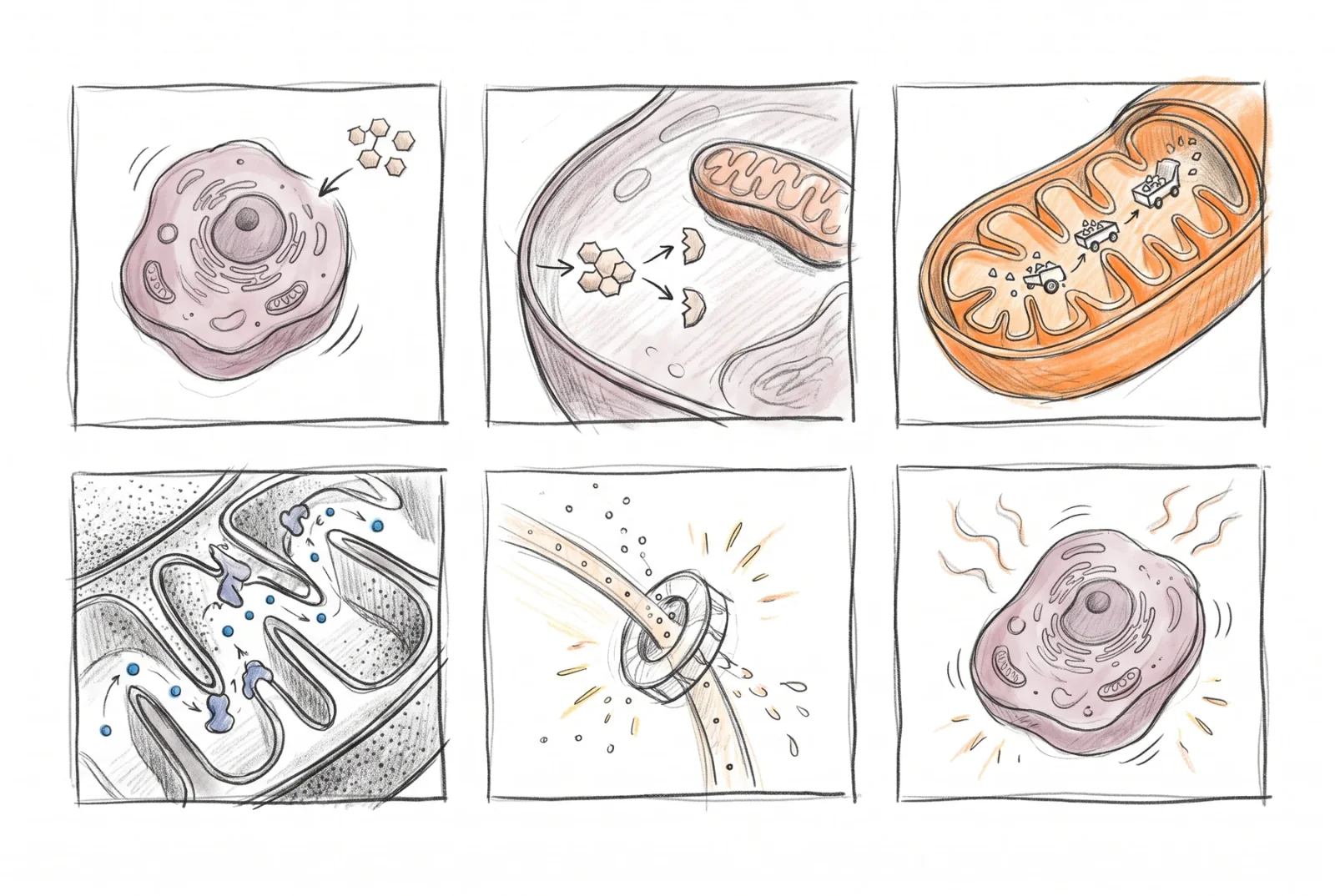
Plan six panels for this task: Explain the main stages of aerobic glucose breakdown in a simplified eukaryotic cell, connecting energy transfer to ATP while keeping the sites of the reactions clear. Keep visual symbols consistent, leave caption space, and use the complete reviewed script below.
Illustrated planning concept, not an editor screenshot or recorded session.
06
Biology · cellular energy · LlamaGen
04 · The creative process
Make a draft. Make it yours.
Locate
Draw the three cell compartments first, then place each stage on the correct part of the map.
Connect
Follow carbon-containing molecules and electron carriers with different visual cues.
Explain
Use the inner-membrane scenes to connect a proton gradient with ATP synthesis and oxygen’s role.
Return
End at a cellular job that uses ATP, then audit the input, product and location captions.
07
Biology · cellular energy · LlamaGen
05 · Comic concept
Six panels, ready to read and question.
AI-generated six-frame location study of an animal cell and a mitochondrion. The written script supplies the glycolysis, electron-transport and ATP-synthase mechanisms; the artwork shows the compartments.
08
Biology · cellular energy · LlamaGen
The next page is yours
Make your own version. Check every caption.
Start with one short scene. Review the words, the characters and the details before making the next page.
Sign-in and generation credits may apply. Features and export options depend on your workspace and plan.
09
By LlamaGen · Original classroom example · Edition
The complete classroom example
Explain the main stages of aerobic glucose breakdown in a simplified eukaryotic cell, connecting energy transfer to ATP while keeping the sites of the reactions clear.
Suggested audience: Secondary-school biology after an introduction to cells, molecules and ATP; simplify the biochemical detail to match the course.
AI-generated six-frame location study of an animal cell and a mitochondrion. The written script supplies the glycolysis, electron-transport and ATP-synthase mechanisms; the artwork shows the compartments.
Read the six-panel script
The illustrations are concepts. These editable captions carry the explanation; read and check them even when images or animation are unavailable.
1. The cell has work to do
A simplified animal cell has a membrane transport task waiting; glucose and oxygen are introduced as starting materials for the aerobic pathway.
The cell transfers energy from food to regenerate ATP, which can support cellular work.
2. Glycolysis in the cytosol
Outside the mitochondrion, one glucose token becomes two pyruvate tokens, with a small ATP cue and an electron-carrier cue.
Glycolysis produces two pyruvate molecules, a net gain of two ATP and NADH. It does not use oxygen directly.
3. Processing in the matrix
The pyruvate tokens enter the mitochondrion. A simplified matrix scene groups pyruvate oxidation and the citric acid cycle, with carbon dioxide leaving and electron carriers being loaded.
Pyruvate processing and the citric acid cycle release carbon dioxide and transfer electrons to carriers such as NADH and FADH2.
4. Electron transport at the inner membrane
Electron carriers deliver electrons to the inner-membrane chain. A separate proton cue accumulates on the intermembrane-space side.
Electron transport helps build a proton gradient across the inner mitochondrial membrane.
5. A gradient helps make ATP
Protons return toward the matrix through ATP synthase. At the chain’s endpoint, oxygen receives electrons and water is formed.
ATP synthase uses the gradient to help make ATP. Oxygen is the final electron acceptor in this aerobic pathway and is reduced to water.
6. ATP supports the original task
The cell’s membrane transport task proceeds with an ATP-use cue; a side summary shows carbon dioxide, water and heat without a fixed total-ATP label.
Some transferred energy is conserved in ATP and some disperses as heat. ATP use connects the pathway to the cell’s work.
Use the script in your own comic
Continue with the complete prompt and six-panel script below, or copy them into the comic workspace. The link prepares a draft; generation only starts when you submit in the workspace. Prepare the images first, add captions using supported editing controls, then check the draft. This page does not promise automatic factual accuracy or a one-click finished worksheet.
Sign-in and generation credits may apply. Do not upload student names or photographs without the appropriate permission. Printing and shipping are not included.
Check the subject before sharing
This is an overview of aerobic respiration in a eukaryotic animal cell, not every form of cellular energy metabolism. It omits many intermediates and combines pyruvate oxidation with the citric acid cycle in one scene. Respiration is a controlled sequence of reactions, not literal burning. Plants also respire; the animal-cell setting is a scope choice, not a claim that only animals use the pathway.
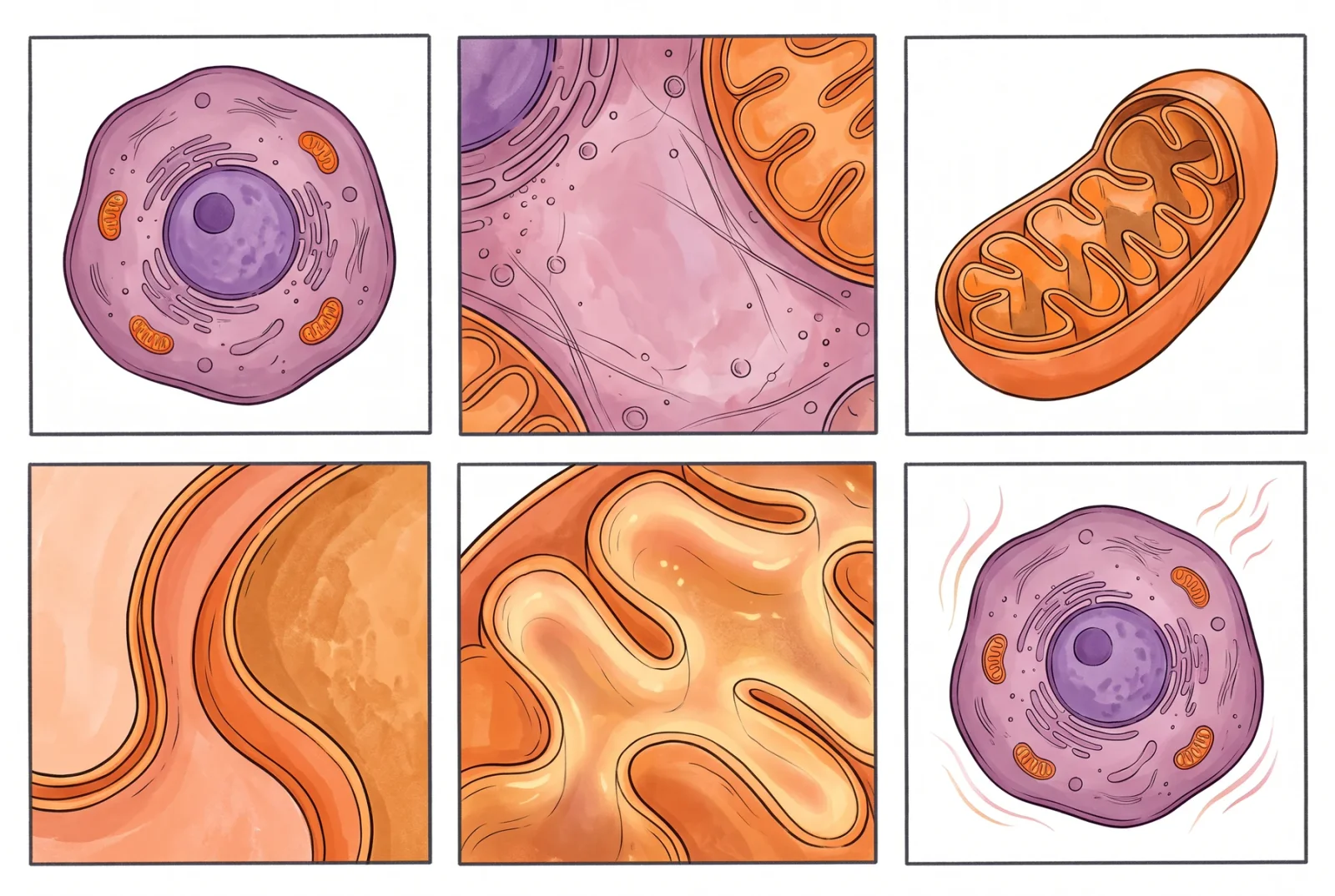
AI-generated cell-compartment review illustration. Use the written map to distinguish cytosolic glycolysis, matrix reactions and inner-membrane ATP production.
Check the compartment before the caption.
The review composition is a simplified location aid. Treat the written stage map as the lesson’s reference, and correct the illustration if its arrows, membrane sides or organelles disagree with the script.
Cytosol: Glycolysis stays outside the mitochondrion; oxygen does not directly perform the glucose split.
Matrix and inner membrane: Carbon-processing stages and the membrane-based transport chain are shown in different locations.
Gradient direction: The simplified model builds up protons on the intermembrane-space side and shows their return through ATP synthase toward the matrix.
Try a different version
Sort six stage cards onto a blank cell map, then cover the location captions and explain your choices. Trace carbon toward carbon dioxide with one mark, and electrons toward the transport chain with another. Finally answer: if oxygen cannot accept electrons at the end of the chain, why is it misleading to draw oxygen as the tool that directly cuts glucose in the glycolysis panel?
Questions about this example
Is cellular respiration the same as breathing?
No. Breathing moves gases between an organism and its surroundings. Cellular respiration is a set of chemical reactions that transfers energy and regenerates ATP. Gas exchange can supply oxygen and remove carbon dioxide, but it is not the whole cellular process.
Does all cellular respiration happen in mitochondria?
Not in this eukaryotic example: glycolysis occurs in the cytosol. The later aerobic stages shown here use the mitochondrial matrix and inner membrane. Prokaryotes lack mitochondria, so this map should not be presented as a universal map of every cell.
Should the comic promise 36 or 38 ATP per glucose?
Avoid a universal fixed total. Actual yields depend on the cell and conditions, including how reducing equivalents are transferred and how the gradient is used. This comic names the stages and their roles rather than treating one textbook total as a guarantee.
How is this different from the photosynthesis comic?
This page follows glucose breakdown, electron transfer and ATP regeneration. The photosynthesis lesson follows how light supports making sugars. The processes are connected through matter, but plants carry out respiration as well as photosynthesis.
Sources and how this page was made
Artwork generation: Google Vertex AI · gemini-nano-banana-2.1.
LlamaGen authored this teaching example using the references below. The script and activity are original; the source scene, storyboard sheet, wordless comic and review illustration were generated separately with Google Vertex AI. They do not demonstrate automatic source-to-comic conversion. No teacher endorsement, measured learning benefit or independent expert review is claimed.
OpenStax Biology 2e: glycolysis — Reference for the cytoplasmic starting stage, pyruvate, net ATP and the lack of direct oxygen use.
Checked against these linked sources for this edition on November 16, 2026. Teachers should adapt vocabulary and verify the final draft against their curriculum.
Your story, one scene at a time
Make your own version. Check every caption.
Plan a cellular respiration comic strip with six scenes linking glycolysis, mitochondrial reactions, oxygen and ATP, plus a location map and misconception checks.
No. Breathing moves gases between an organism and its surroundings. Cellular respiration is a set of chemical reactions that transfers energy and regenerates ATP. Gas exchange can supply oxygen and remove carbon dioxide, but it is not the whole cellular process.
How was this classroom example made?+
An original LlamaGen classroom example with AI-generated editorial illustrations. Not a customer project, scientific observation or verified product output. Check the supplied captions and sources before classroom use. No customer quotation, endorsement or measured outcome is claimed.
More ways to tell a story
Another page. Another possibility.
An original LlamaGen classroom example with AI-generated editorial illustrations. Not a customer project, scientific observation or verified product output. Check the supplied captions and sources before classroom use. Images were created with Google Vertex AI. The illustrated planning and comic stages do not demonstrate an automatic transformation of the source illustration.
Read, review and print an original four-panel story
These original English-language illustrations were created directly with Vertex AI. They are editorial examples, not customer projects or proof of the website’s upload, credit deductions or generation flow. Interface and notes are translated; lettering in artwork remains English.
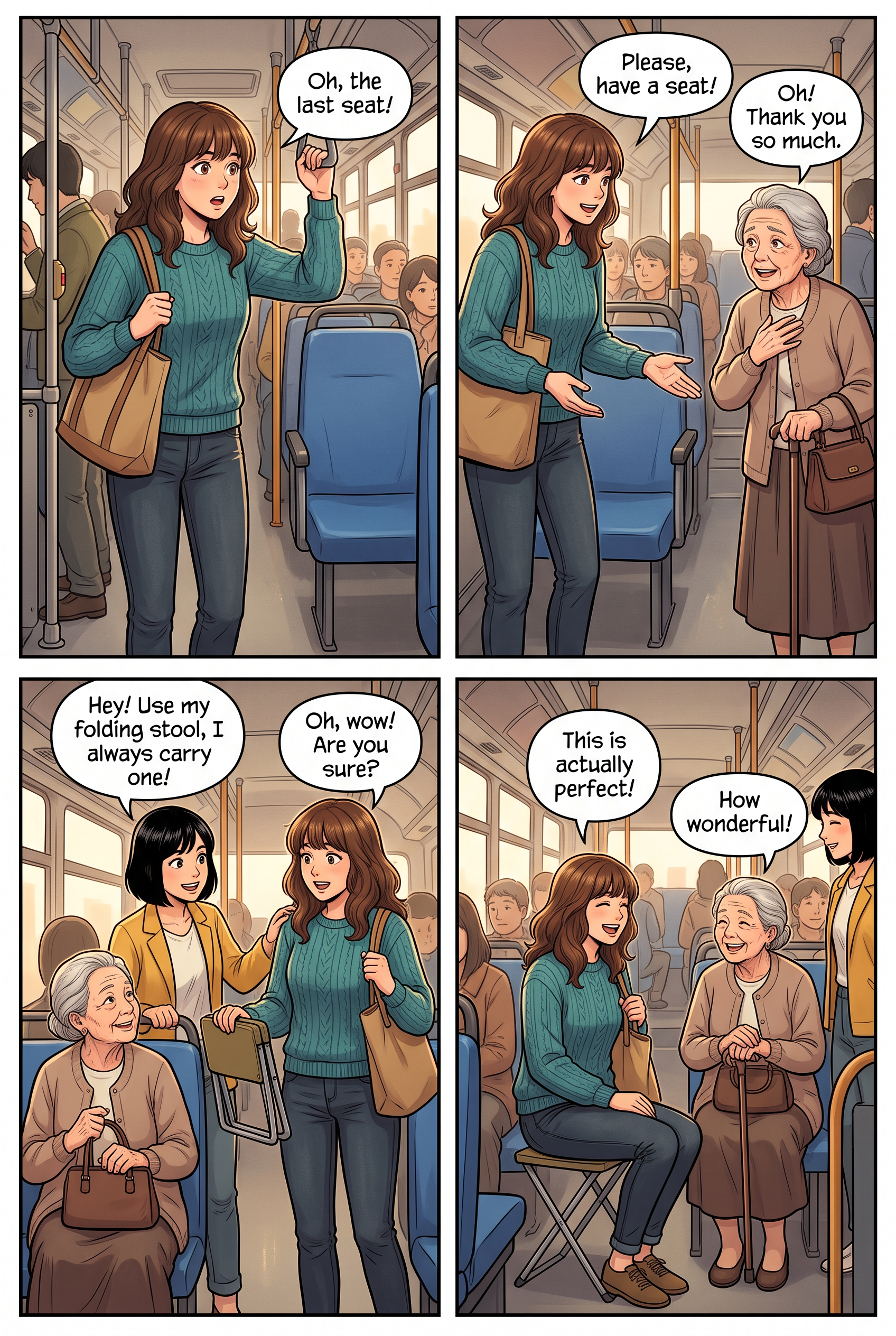
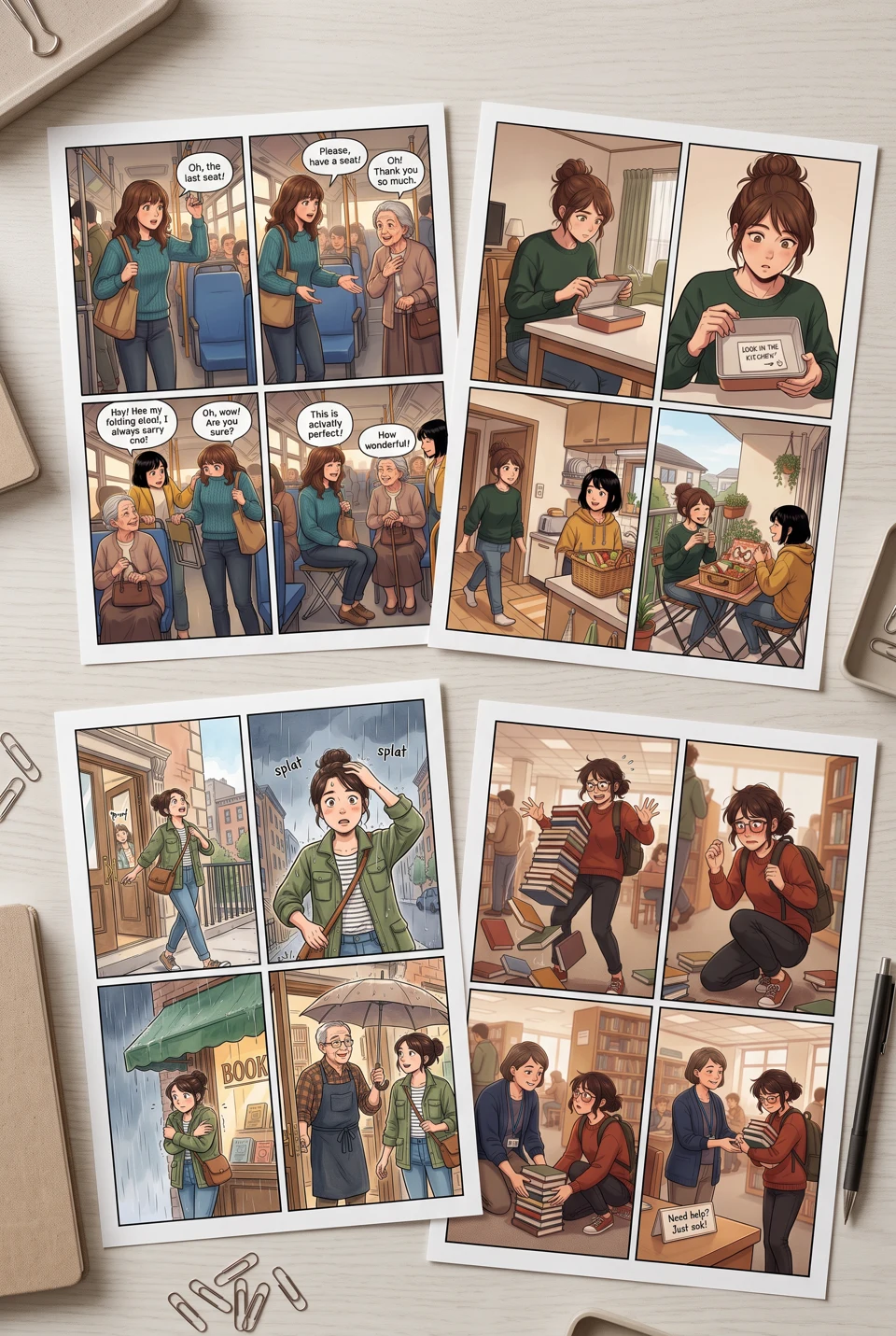
The Last Seat
A commuter notices the last bus seat. She offers it to an older passenger. A friend offers her a folding stool. She laughs beside the seated passenger.
Original English generation brief
Create an ORIGINAL finished four-panel comic page in portrait 2:3, exactly two rows and two columns with four clear equal panels and white gutters. Warm professional color manga, adult female lead, fully clothed casual contemporary clothing. Maintain identical face, hair, clothing and props through the four panels. English story, mostly visual storytelling, no extra captions, no title printed on image, no watermark, no borrowed franchise characters. Clear left-to-right top-to-bottom sequence. Four beats: A commuter notices the last bus seat. She offers it to an older passenger. A friend offers her a folding stool. She laughs beside the seated passenger. Natural hands and readable staging. This is original editorial artwork, not a photograph or a customer testimonial.
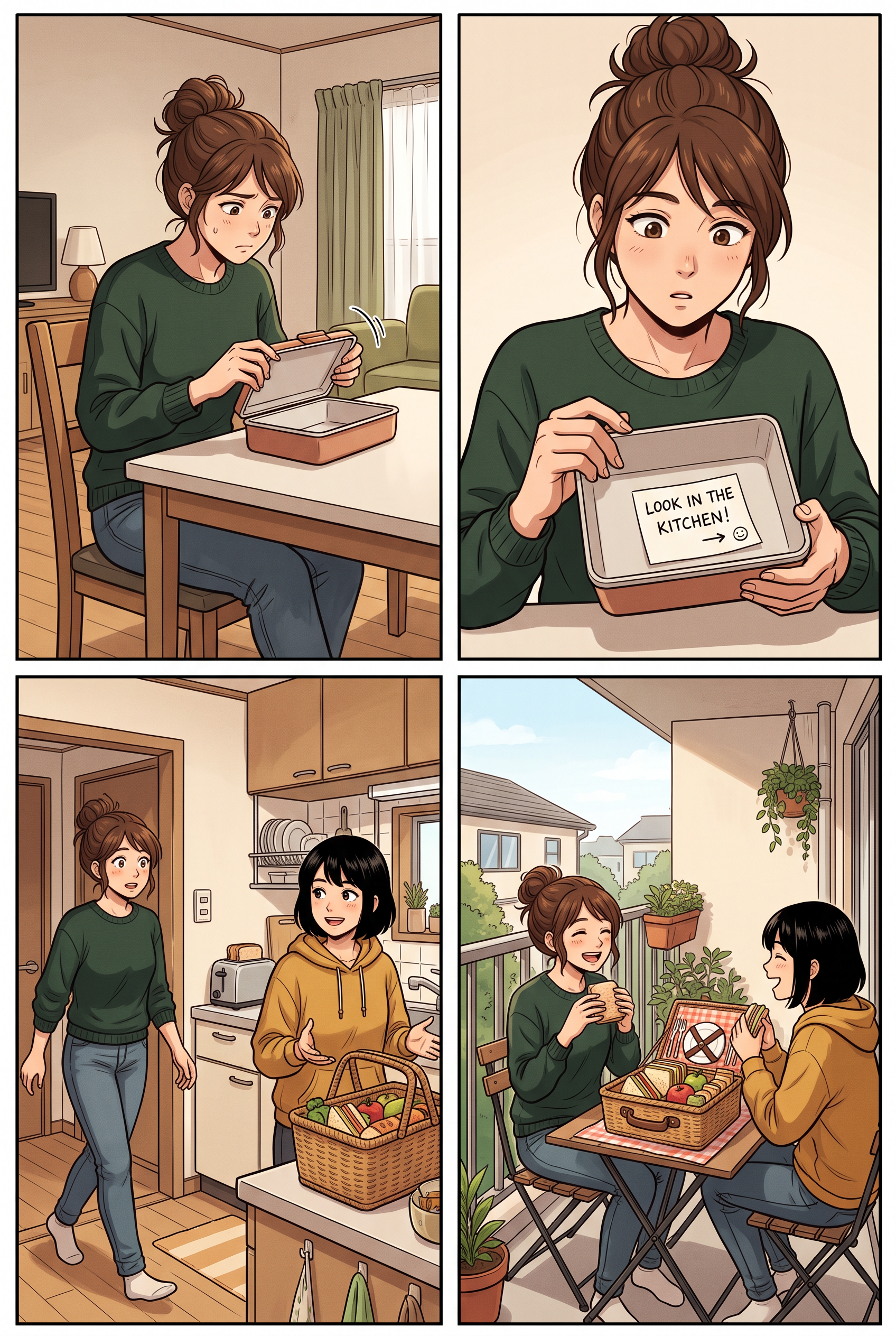
A woman opens an empty lunch box. She finds a note pointing to the kitchen. Her roommate reveals a picnic basket. They eat together on the balcony.
Original English generation brief
Create an ORIGINAL finished four-panel comic page in portrait 2:3, exactly two rows and two columns with four clear equal panels and white gutters. Warm professional color manga, adult female lead, fully clothed casual contemporary clothing. Maintain identical face, hair, clothing and props through the four panels. English story, mostly visual storytelling, no extra captions, no title printed on image, no watermark, no borrowed franchise characters. Clear left-to-right top-to-bottom sequence. Four beats: A woman opens an empty lunch box. She finds a note pointing to the kitchen. Her roommate reveals a picnic basket. They eat together on the balcony. Natural hands and readable staging. This is original editorial artwork, not a photograph or a customer testimonial.
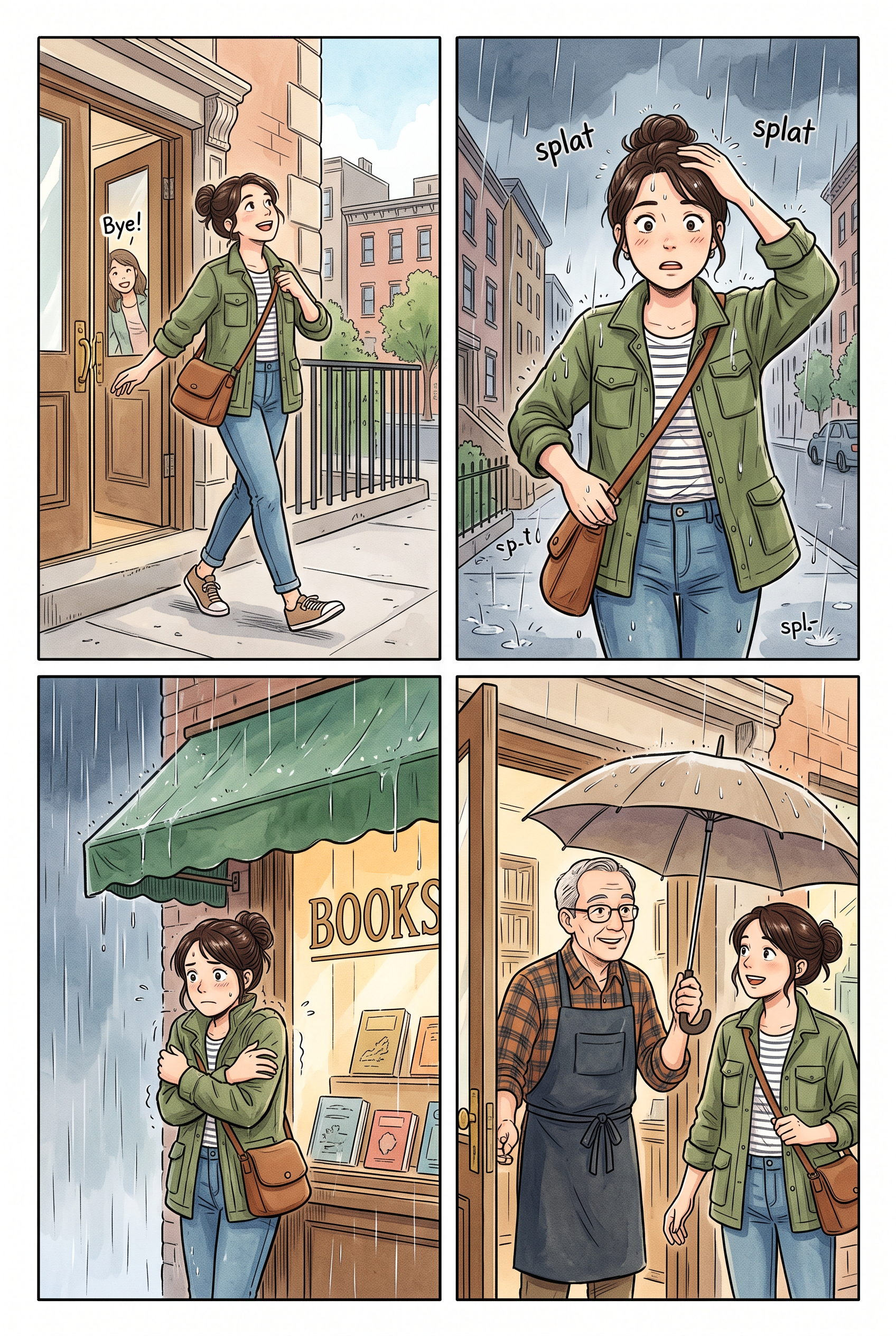
A woman leaves home without an umbrella. Rain begins. She shelters under a bookshop awning. The bookseller shares an umbrella and they smile.
Original English generation brief
Create an ORIGINAL finished four-panel comic page in portrait 2:3, exactly two rows and two columns with four clear equal panels and white gutters. Warm professional color manga, adult female lead, fully clothed casual contemporary clothing. Maintain identical face, hair, clothing and props through the four panels. English story, mostly visual storytelling, no extra captions, no title printed on image, no watermark, no borrowed franchise characters. Clear left-to-right top-to-bottom sequence. Four beats: A woman leaves home without an umbrella. Rain begins. She shelters under a bookshop awning. The bookseller shares an umbrella and they smile. Natural hands and readable staging. This is original editorial artwork, not a photograph or a customer testimonial.
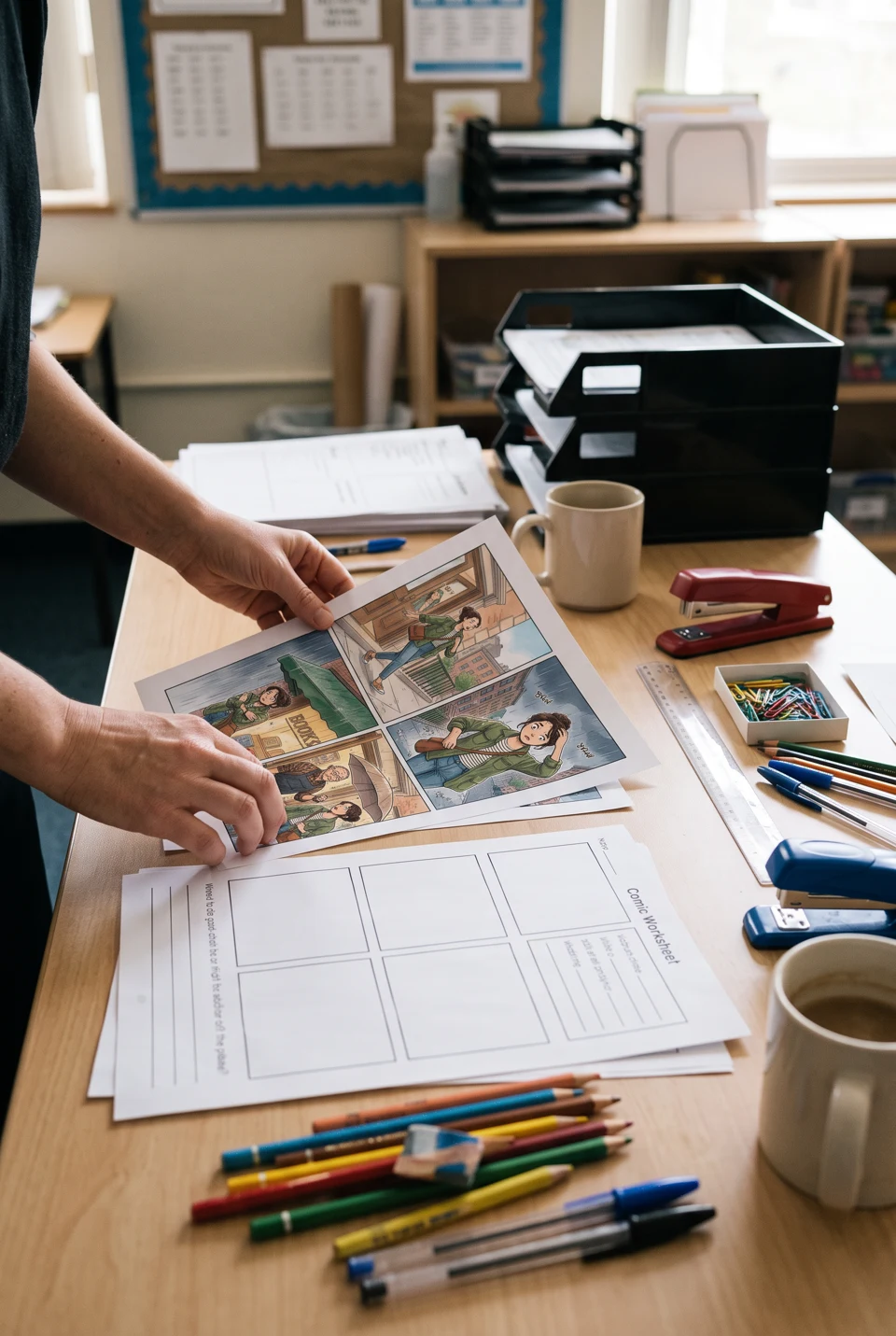
AI-generated illustrative use scene featuring our original comic artwork. Not a customer photograph or a physical print test.AI-generated illustrative use scene featuring our original comic artwork. Not a customer photograph or a physical print test.
Review before sharing
Read left to right, then top to bottom. Check four distinct story beats.
Compare face, hair, clothing, hands and recurring objects across panels.
Check every caption and speech bubble. Verify classroom facts against the linked source.
Open the downloaded PDF and check order, margins and readable text at actual size.
Downloads and generation have different requirements
The sample images, blank templates and PDFs can be downloaded without an account. AI generation uses the existing sign-in, plan and credit rules. Check the displayed cost before submitting. A4 and Letter files fit the whole image inside a half-inch margin; physical printer output has not been tested.
Cellular Respiration Comic Strip: A Cell Pays for Its Work | LlamaGen