Scene cards with purpose
Summarize goal, conflict, turn, cast, location, and the visual question each scene must answer.


Organize the pieces that make a scene playable and visual: dramatic beats, recurring locations, hero props, character presence, and the continuity notes that connect one moment to the next.
Opens the LlamaGen storyboard project workspace.

Northline / visual direction
One story world, carried from screenplay to production.
Plan what the scene needs
Identify the scene's turning point, the objects that matter, the physical space, and the characters who change it. Use that shared context to create a clearer brief for writing, shot planning, and storyboarding.
Summarize goal, conflict, turn, cast, location, and the visual question each scene must answer.
Separate setup, escalation, reversal, reaction, and decision so shots follow dramatic rhythm—not arbitrary image count.
Track hero objects, environmental rules, time of day, damage, wardrobe state, and other details that persist between frames.
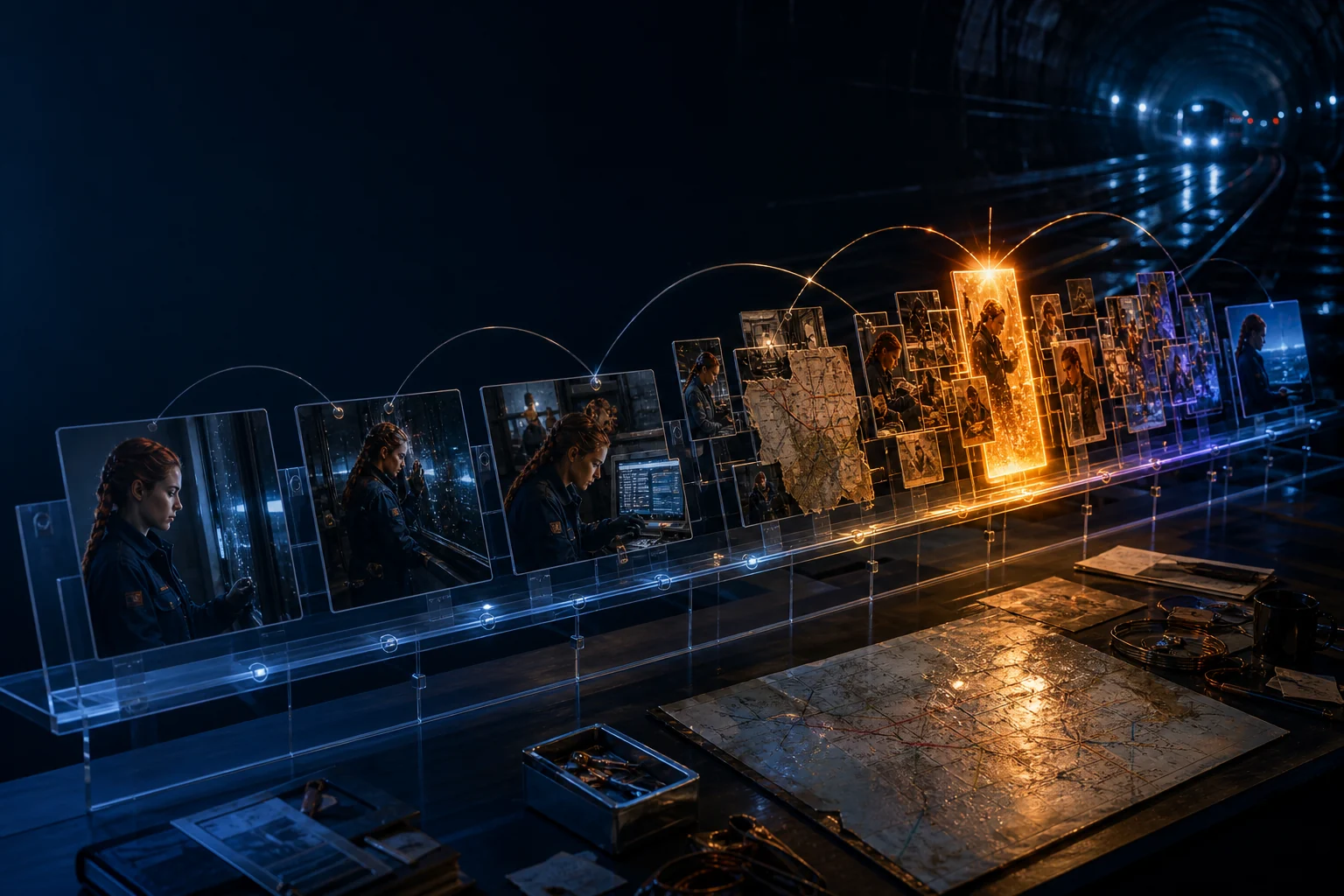
Worked example · A practical scene brief
The goal is not to turn a screenplay into a database. It is to make the story's physical and dramatic logic available when you need to generate a frame or discuss a shot.
The workflow
A small amount of structured planning produces a much stronger visual sequence.
State what changes by the end of the scene and which character action causes that change.
List cast, location, time, props, wardrobe, atmosphere, and continuity inherited from the previous scene.
Choose coverage that reveals information, emotion, and spatial change in the right order.
Explore the connected workflow
Storyboard coverage planning
Turn one approved screenplay scene into a reviewable coverage plan: map story beats to shot purpose, framing, screen direction, continuity risks, and an intentional shot order. This workspace is for pre-production decisions, not one-click storyboard generation.
Script structure visualization
Turn scenes, beats, character pressure, locations, and turning points into a readable story map. Find pacing gaps early, then open the exact sequence that needs revision or visualization.
AI production assets
Generate character portraits, location studies, prop designs, scene stills, and storyboard frames from the context already present in your story, then keep the useful results organized for the next creative decision.
FAQ
A scene is a continuous unit of action in a place and time. A beat is a smaller change in tactic, information, emotion, or value inside that scene.
Track props that affect plot, performance, continuity, safety, visual identity, or later setup and payoff. Background clutter usually does not need the same attention.
Location rules shape blocking, camera placement, light, entrances, exits, and continuity. A clear location brief keeps frames spatially coherent.
Write or import a scene, shape its structure, and turn the screenplay into a storyboard you can refine, share, present, and export.